
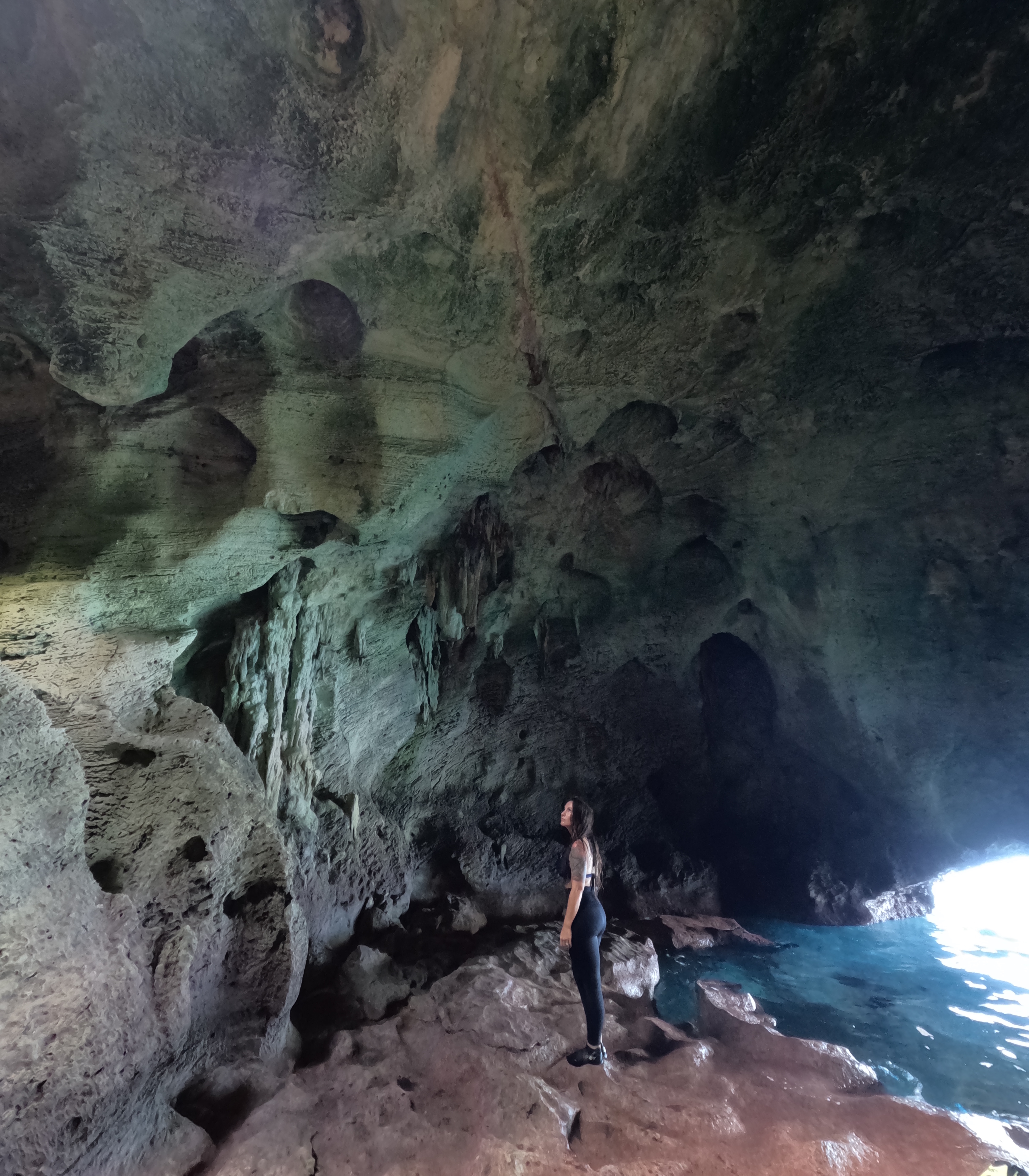
We toss ourselves out of Scout (our dinghy) backwards, in the chilly crystal-clear water below the boat. Mask and fins strapped on; we snorkel towards the tall rock island covered in vegetation called the Rocky Dundas. Our Explorer Charts tell us about a beautiful limestone cave inside with impressive stalactites and stalagmites formations reaching out from the ceiling and cave floor. To find it, look for the two small dingy moorings near the entrance. We hear if arriving closer to high tide, you must dive under the water to access the cave chamber. However, arriving at low tide, it wasn’t difficult to see the beam of light reflecting underneath a rock ledge. Kicking our way through the water towards the light, we pass beneath the dark stone ledge, and look up. My chin dropped as we both gazed in awe of the ancient wonder that, for just a moment, was all ours to enjoy.

The Rocky Dundas (my new favorite place) is a part of the Exuma Cays Land and Sea Park. This National Park, the crown jewel of the Exumas, was the first marine reserve of its kind in the world, spanning 112,640 acres of land and sea. While these caves sat on the southern end of the park boundary, our first stop in the park, Shroud Cay, is at the top.

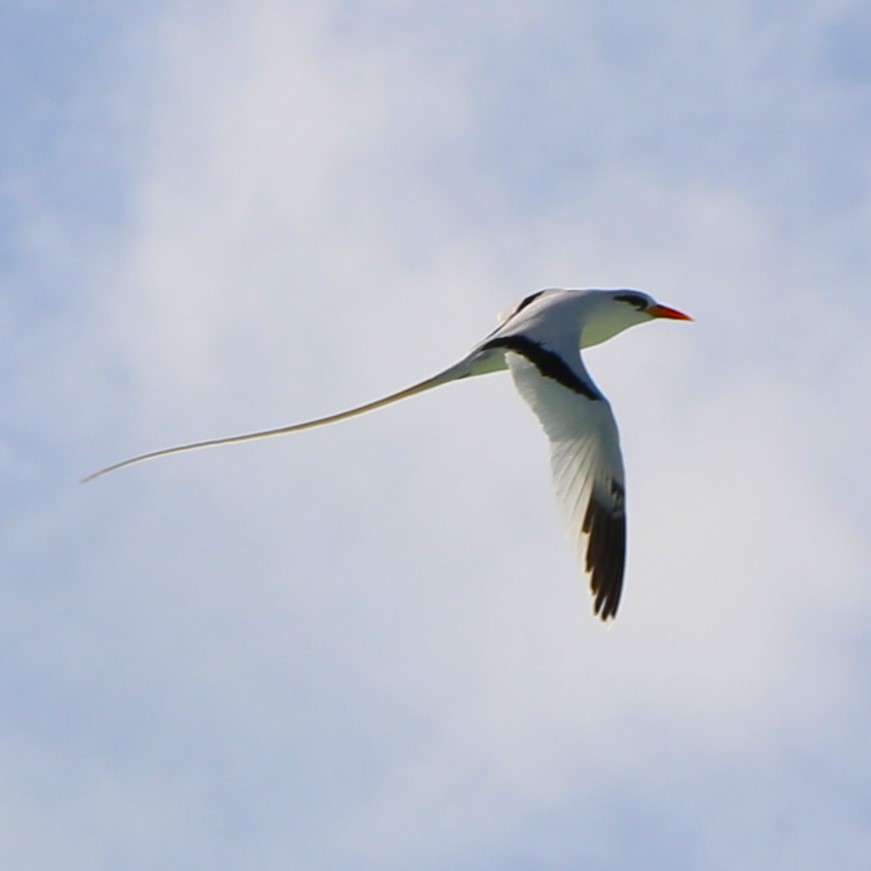
Arriving in Shroud Cay, for our first day in the park, we settle Belafonte in and motor up to the honor box to drop our park dues off. We notice a trail just past the collection box and decide to check it out. Dodging poisonwood trees (which we became pretty good at while living in the Florida Keys), and tiptoeing over the porous limestone trail, we find a big freshwater well at the end of the trail. Weaving our way back, swift white-tailed Tropic birds dart through the sky in front of us, skimming the rocky cliffs and ledges that overlook the bright blue ocean. Our stay on Shroud continued exploring mangrove tunnels, more hiking trails, and powder-soft sandy beaches.

The Park Headquarters is located on Warderick Wells Cay, our next stop. Sailing into that anchorage feels like a dream, as the miles of white sandy bottoms make the vibrant water pop like a neon blue highlighter. A whale skeleton lines “Whale Beach” next to the Ranger Station. Massive hermit crabs guard the boardwalks as we grab a trail map and start hiking around the island.

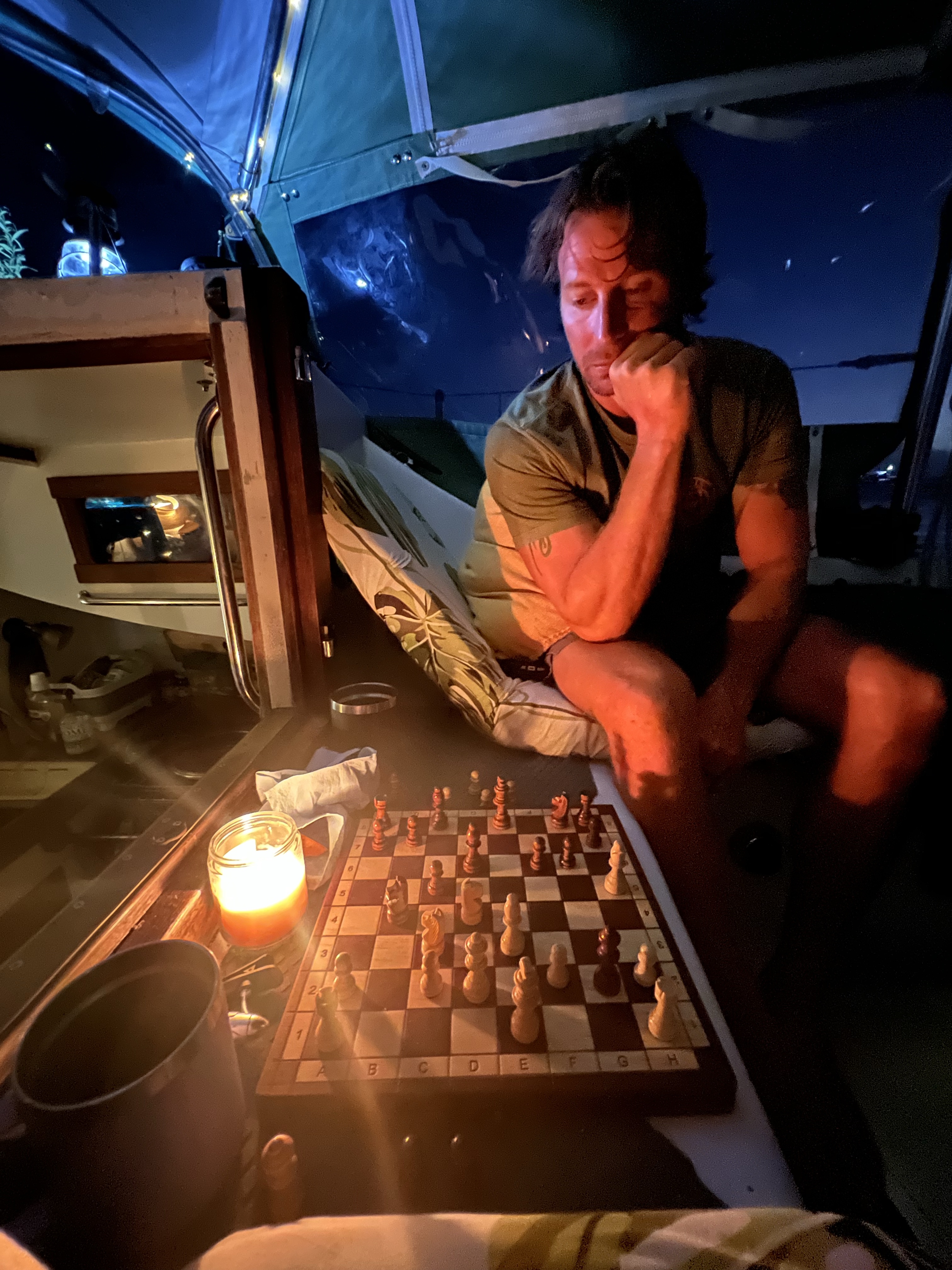
We wander through tropical scrub, mangrove habitat, weathered beaches, and rocky hills (such as the famous “Booboo Hill” where cruisers will leave a piece of wood with their name painted on it). We were even lucky enough to see two of the park’s VIP residents, the rare Bahamian hutia (Geocapromys ingrahami) the only terrestrial mammal native to the Bahamas, and an Audubon’s shearwater (Puffinus lherminieri), as the park also protects the largest known colony of these birds left in the West Indies. Covering most of the winding trails, in the evening we kick back and relax, stargazing from a hammock and playing chess between ideas of the next day’s adventures.
The follow day takes us to the “Pirate’s Lair” at the south end of Warderick Wells. Being the self-proclaimed nature nerd I am, and my recent studies on algae, we initially headed here to see the famous stromatolites. If you’re thinking, what the hell is a stromatolite?! No worries, hear me out though… they’re layered rock formation, billions of years old, created by microorganisms (most importantly cyanobacteria [algae]) that are the oldest lifeforms on earth and generated the oxygen in our atmosphere, thus providing the environment for all life on Earth to exist (yep, also very important). Sooo, yes. I wanted to go check out some rocks. The current was ripping hard, but we made it happen and were able to see the stromatolites.
Look, the show isn’t all that impressive, but the concepts surrounding them and being able to see it for myself made me happy and grateful. For more info about these stromatolites, click here. Since we were on this side of the park, we decide to check out the surrounding trails.

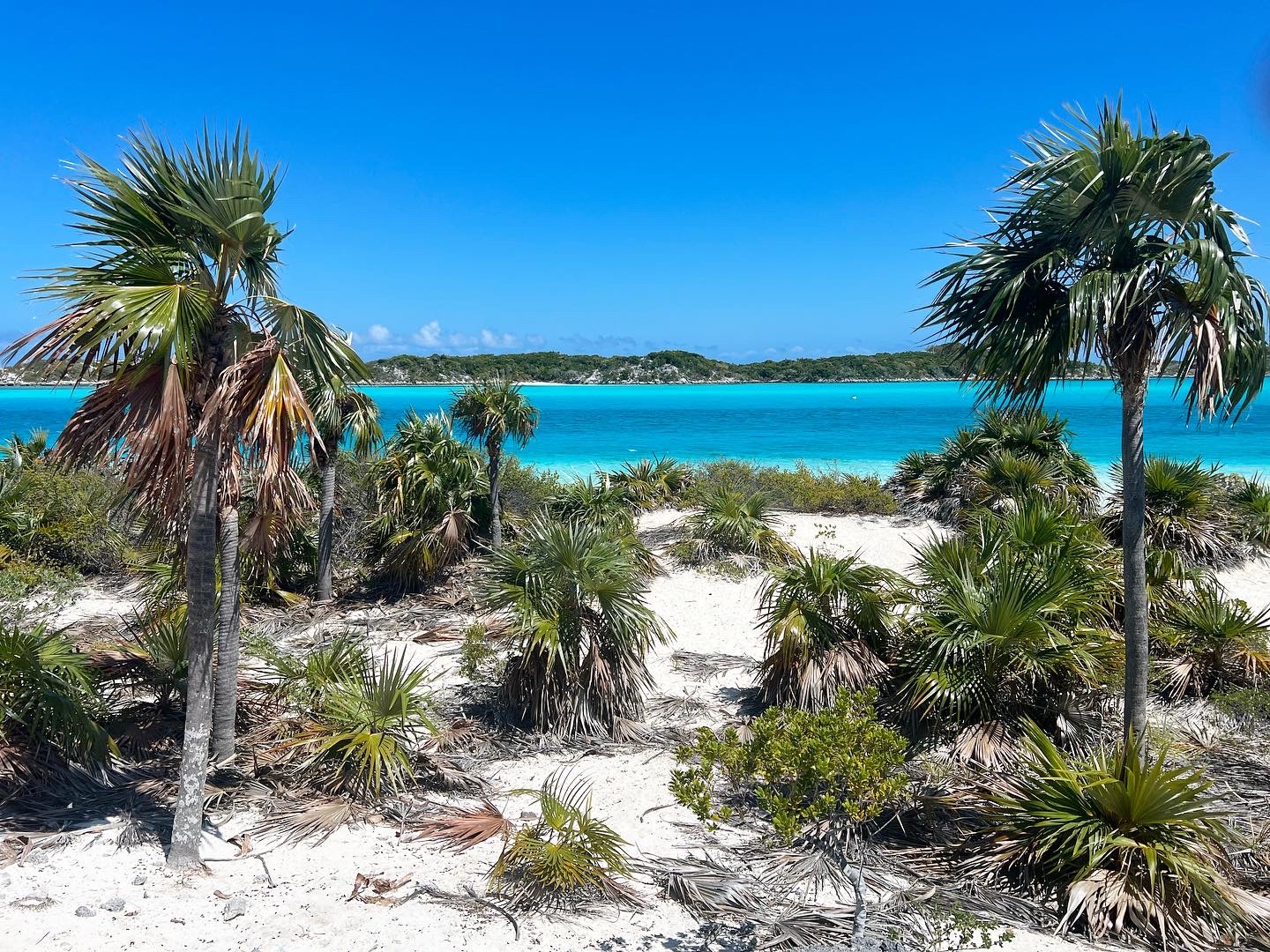
Walking up the lush sandy trail lined with palm trees and aged queen conch shells, we find a sign that says the “Pirate’s Lair” and walk closer to the next sign explaining the history.
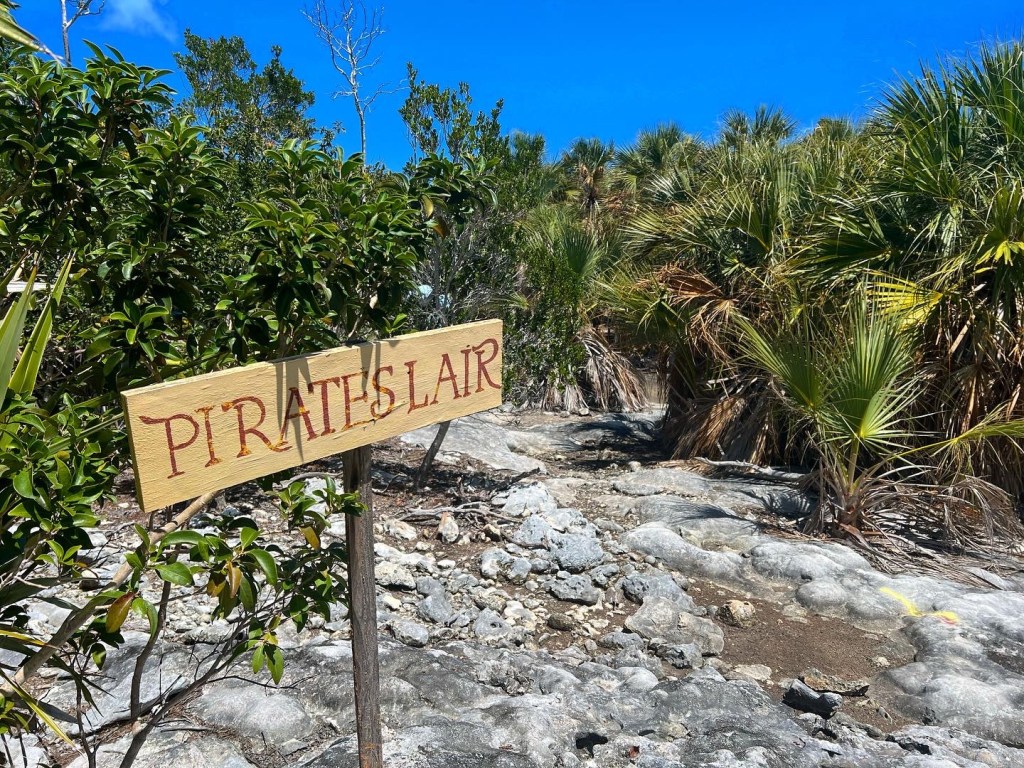

The sign reads…
“This was once a pirate’s lair. The anchorage was hidden from view and water found in the natural well was fresh and sweet. When the pirates came ashore to camp by the well, they brought their sleeping mats and other possessions. Stuck to these items were seeds from distant places. Some of the seeds grew, leaving a small collection of plants not native to the Bahamas. Unknown to the pirates, this sweet water collects under the island as a freshwater lens. The well is a natural sinkhole, refreshed by rain that percolates down through the limestone. The freshwater lens is easily polluted or destroyed. Please avoid contamination and use it sparingly.”
We also found the tunnel on the other side of the cove on “Escape Beach.” However, we don’t recommend this close up view for everyone. The rock we were walking on was an obstacle course filled with ankle twisters and sharp jagged edges to break your fall into. I figured that out the hard way as a quick foot slip laid me out leaving a bloody cut on the side of my foot, scuffed palms, and a bruised butt. The blood squished between my toes in my strapped hiking sandals as I slowly descended back down the jagged hillside to clean off my foot.
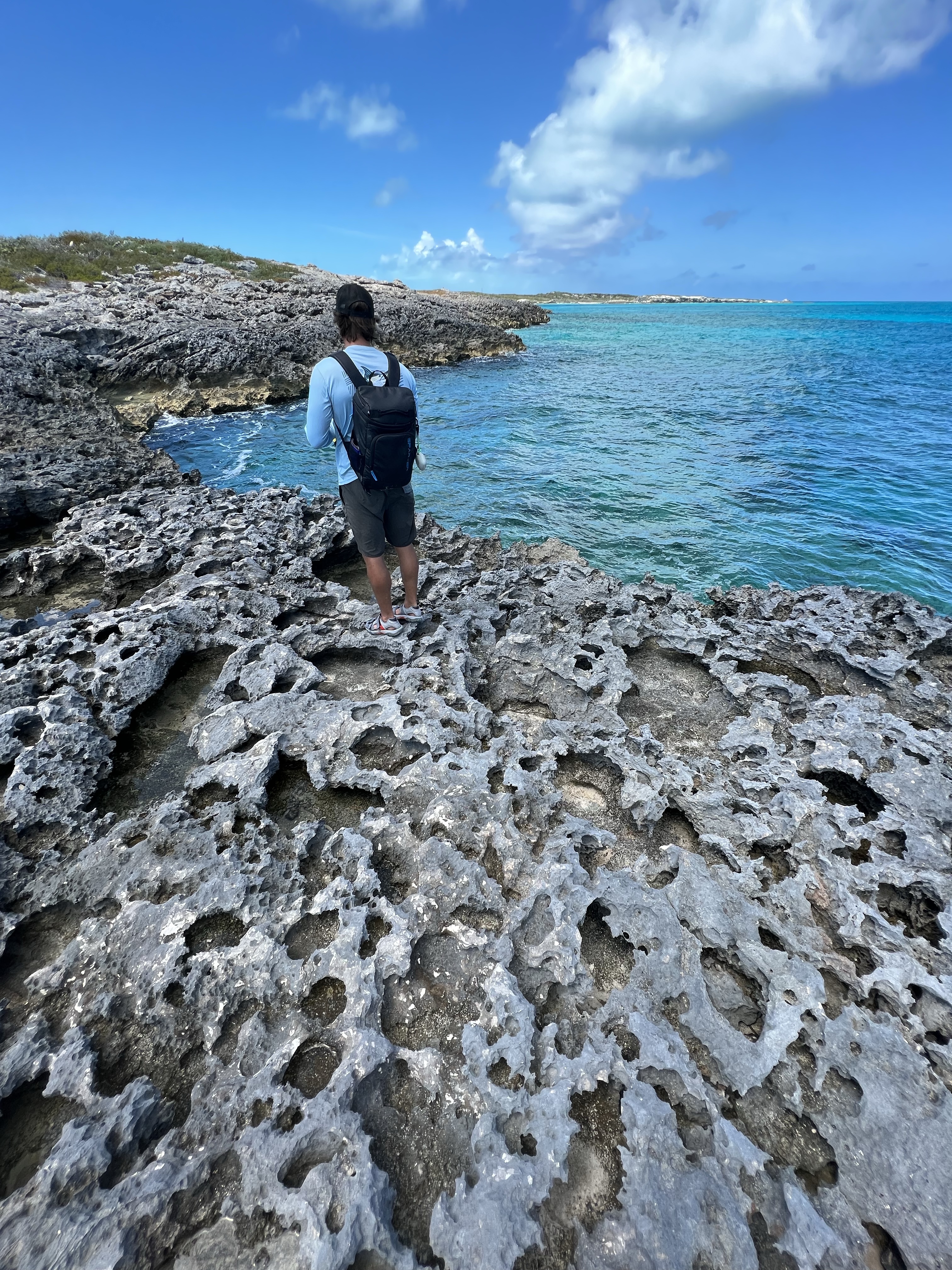
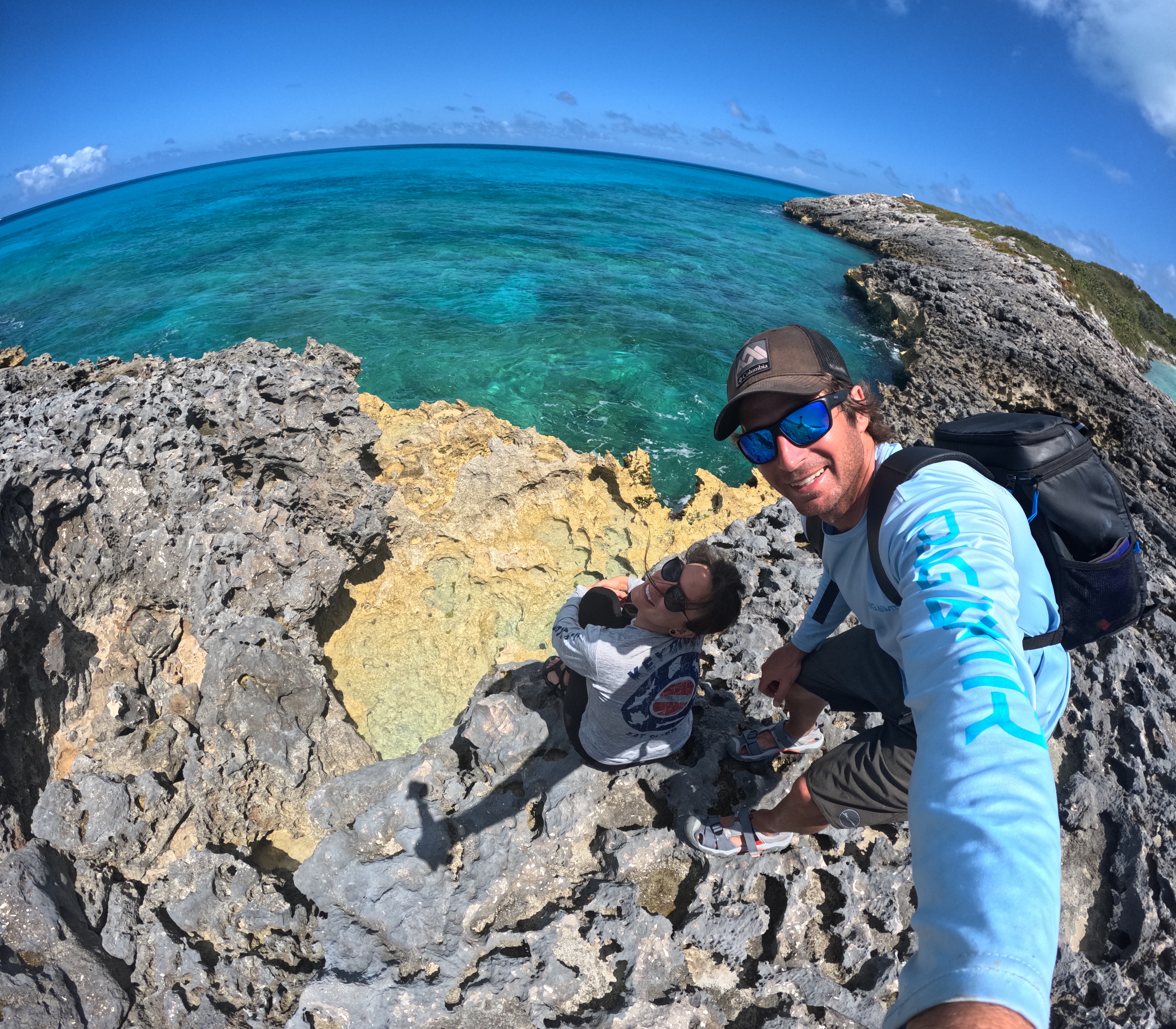
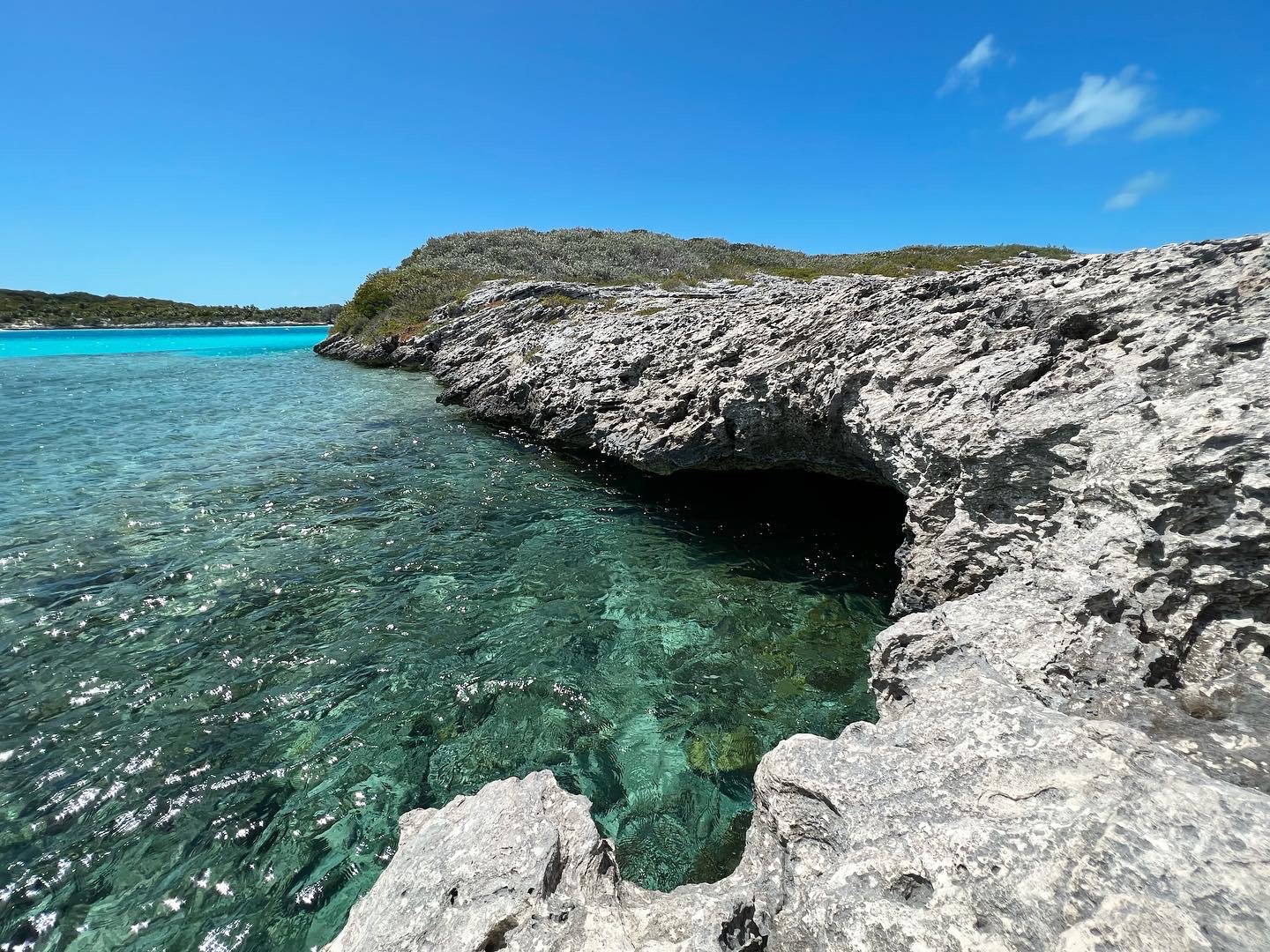
While dinghying back to Belafonte we saw two giant manta rays slowly gliding alongside each other. Being my first-time seeing mantas in the wild, I was so excited, my bloody foot was a distant memory.
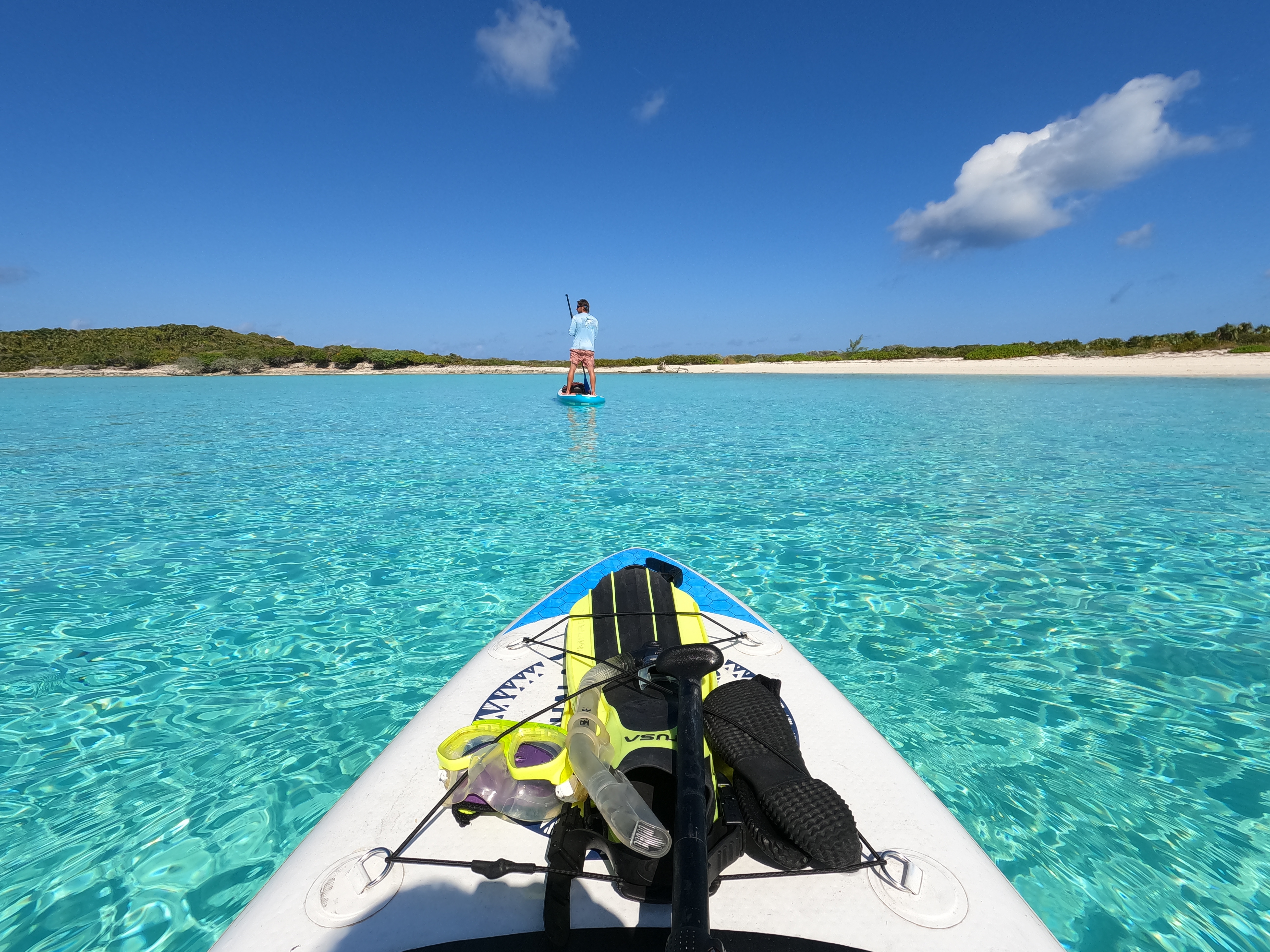
We fill the following days exploring old ruins, venturing down more scenic trails, paddleboarding shallow bays, and snorkeling sessions on coral patches in famed sites like “The Aquarium,” and a plane crash right outside O’Brien’s Cay. (A different plane than the last post haha, yikes!) Which is also, next door to“Johnny Depp’s island,” though we were told he doesn’t own it anymore.


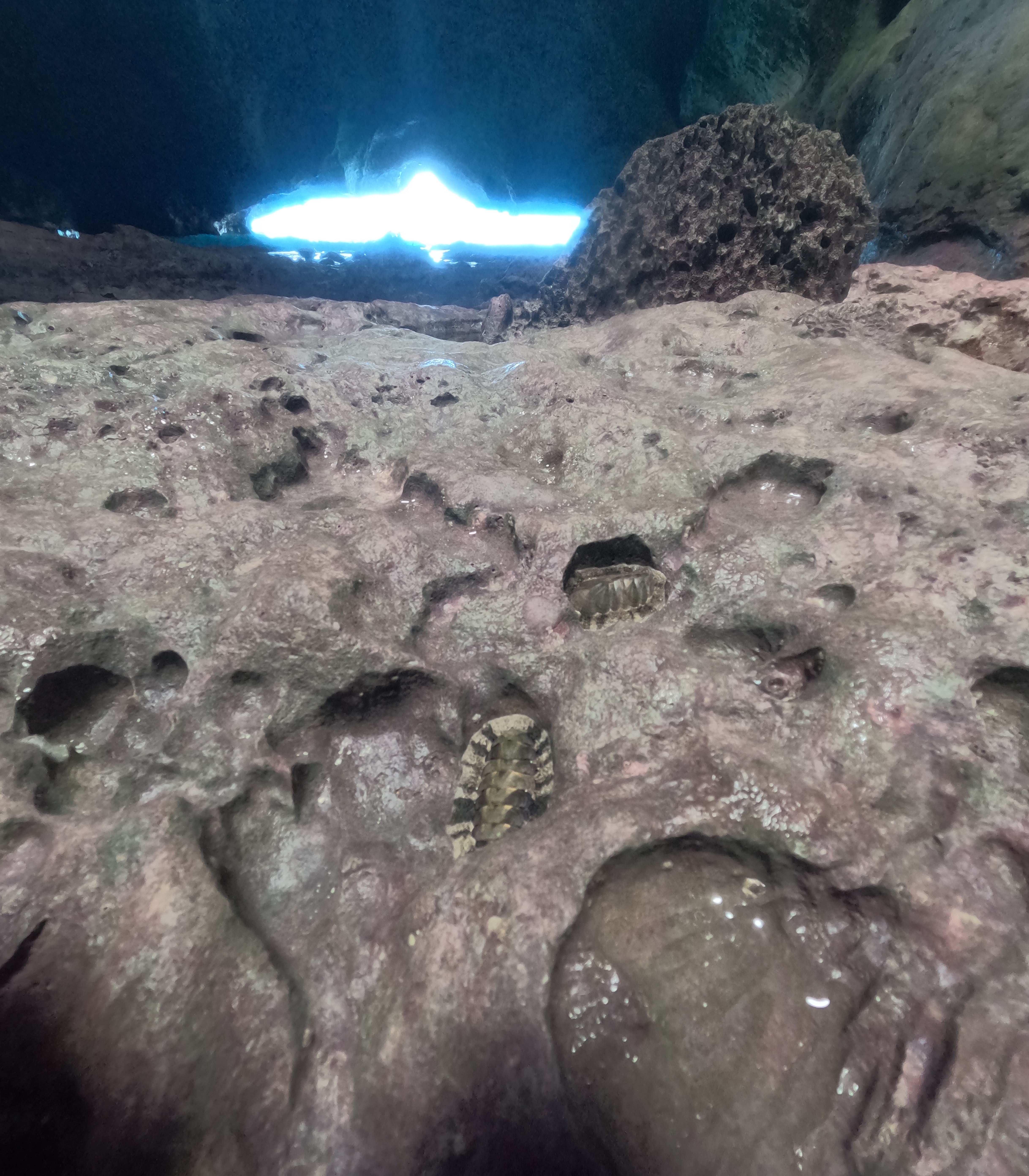
Zipping back to the beginning of this log, our last stop in the Exumas’ magical Land and Sea Park was fascinating. The glory and wonder of Rocky Dundas still sticks in my memory, the way watching a great film for the first time replays in your mind the following days. Bright purple sea fans and golden sea rods wave you towards the dark rock wall as colorful fish cruise below. Once inside the cave, large holes in the cave’s ceiling let in beams of sunlight, accentuating the large fossils of conchs and ancient coral embedded in the damp stone walls. Chitons hide in hollowed out pockets and impressive speleothems (stalactites and stalagmites) stand at attention.


Now with a taste for mysterious caves, we set sail for our next stop, Staniel Cay, home of the famous Thunderball Grotto. Some may find it familiar from the 1963 James Bond film Thunderball. This grotto has been featured in several films, so we figure, it’s got to be pretty cool, right?
We lift the anchor to go see for ourselves.
~ Day 42
 Sailing la Cosmica
Thank you for taking me along on your amazing journey! Seeing through your eyes make my heart so happy. Be careful out there!
LikeLiked by 1 person
Very well written, an adventure for us through words and photos.
LikeLiked by 1 person
Thank you!! 😁
LikeLike