
First, a quick note.
Ok… back to the story! 🙂
Sorry for the day delay on dropping this post. We’ve been having a tough time with our internet provider here and we were mistakenly cut us off! We went into the city today to get it straightened out, so we’re back up and running, but that was definitely unexpected.
Also, this one’s a long one, (maybe the longest log yet) but so was the journey, and we promise it’s all worth it!
Be sure to catch up to this point by reading Part 1 and Part 2 beforehand. Thanks and enjoy!
My eyes slowly peel open with my face squished into a comfy foam pillow. It was finally departure day. Hearing the watermaker hum, I lift my head to peer out the teak wood grading near the bed to spy on Brendan. I don’t see him. Then I hear steps above me. He must be double checking the rigging.
I roll off the bed and walk on deck to meet him. “How’s it going?” I ask. “Good!” He replies. Ok, he seems chipper. I need to chipper up too. I go back below to poor a cup of coffee and pretend it’s just another normal day. I start my own checks inside.
The nonessential items are barricaded and packed. The safety and emergency gear are accessible. One last weather check to affirm we are still clear for takeoff. I put away the dishes and shove bandanas between the few glass items we still have.
Most of the preparations are already taken care of, such as staging the storm sail, tying up remaining items on deck, and of course charting the course. Amy from Motherload Sailing swings by on their dinghy to check in on us. They will be our buddy boat for the passage. We plan to stay within radio communication of each other in case something sketchy, or worse, happens out there.
We try to download as many playlists, podcasts, and Spanish lessons as we can, since we won’t have any internet while underway. I whip up simple sandwiches and double check the icebox. Yesterday I cooked up four big dinners to start the trip with and packed them in order. I sautéed a separate large container of vegetables and a large pot of rice as back up.
As mentioned in Part 1 and 2, the plan is to take the Windward Passage, which will push us in between Cuba and Haiti, past Jamaica, and into the wide-open Caribbean Sea, where we cut across to Panamá. No stops. Which weather depending, could take anywhere from 7-10 days. We break up the days into shifts: I’m 9-3 and Brendan 3-9. That is, I’m on watch from 9 a.m. to 3 p.m., and 9 p.m. to 3 a.m., and Brendan’s on watch from 3 p.m. to 9 p.m., and 3 a.m. to 9 a.m.

Finally, it’s time to hoist the anchor and get underway. Nerves and excitement rush through me as I grab the tiller and Brendan pulls up the chain. Before I know it, we’re off! It’s not the calmest day on the water when we round the corner by Matthew Town, but we line up on our track and push on. This wouldn’t be the worst, but it wouldn’t be the best part either. Rocking back and forth, we finally get comfortable, and I go below to relax before my night shift starts at nine.

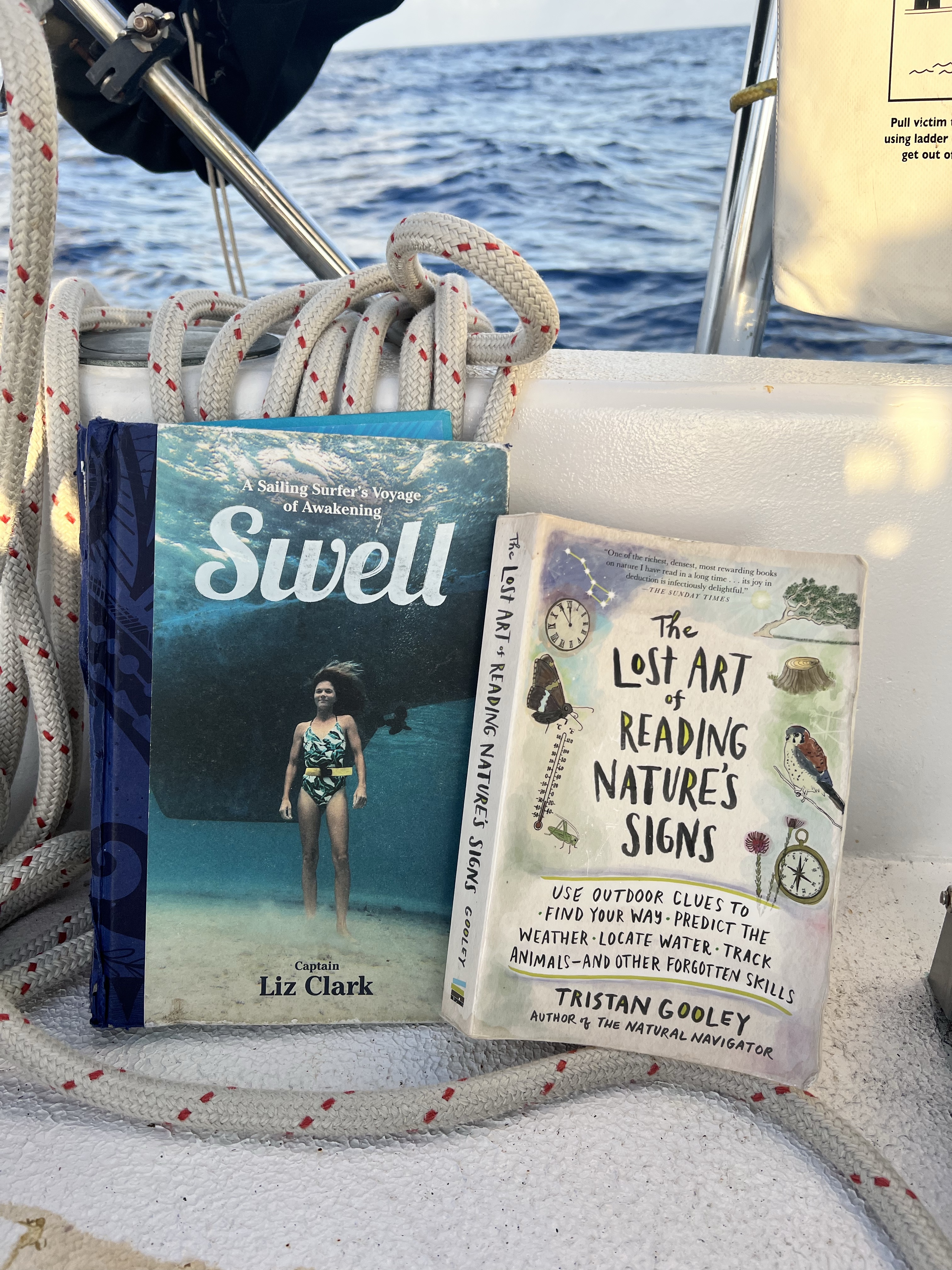
I try to nap, but I just can’t, so I don’t force it. Instead, I continue reading “Swell,” a wonderful book written by Captain Liz Clark about her sailing adventures and her own soul-searching quest. A very fitting gift from my also very adventurous sister. I think of my family so much, and wish I was able to call them. Around 8:30 p.m., I clip on my PFD and join Brendan up top.
We decide to put a reef in the main sail in case the winds pick up in the middle of the night. This essentially shortens the sail area and can prevent us from being overpowered if gusts pick up. It’s much easier as a two-person job. Brendan clips his PDF into the lifeline and walks to the mast. I steer into the wind to reduce tension on the sail, being sure not to over-correct. The waves bash into our port side as Brendan makes the adjustments. “Hold on!” I nervously shout as I spot a glimmer of a larger wave approaching. Belafonte rocks dramatically for a minute then settles again. A few minutes later Brendan shouts back, “Ok, you can head back down!” I pull the tiller towards me as we turn to starboard and get back on course.
“Good job babe,” Brendan says. “Good job me? You did all the work!” I smirk back (while secretly feeling pretty good about it). “You good?” He asks. “Yeah, I’m good.” I say. “Ok I’m going to sleep.” Brendan says as he steps into the companionway and heads to bed. Switching my gaze between the perimeter, the chart plotter, and my book, we sail under a big, round, golden moon peeking down at me through a curtain of clouds.
The cool, salty air feels refreshing on my skin. I listen to waves splash against the hull and create a fizzing sound as tiny bubbles break the surface. Leaning my head over the rails to stare into the pitch-black depths, I find more than darkness. With every wave and splash, dozens of tiny bioluminescent particles burst, glowing green, then fade into the sea behind us as we pass them by. The stars may not be out tonight, but the bioluminescence puts enough twinkle in my eyes to keep a soft smile on my face. This, feels right.
As we begin our descend between Cuba and Haiti, I keep a sharp eye and ear out for other boats. We pass several large tankers and cargo ships, calling them on the radio if our collision course gets within a mile of each other, and communicate our intentions. We have AIS, which allows us to see other registered vessels and be seen, but it’s still important to communicate directly. What if the captain’s sleeping at the wheel or just hasn’t noticed us yet? If we’re close, typically the motor vessel will alter course. They are much faster than us, with better maneuverability. I used to have sort of “stage fright” when calling these massive boats, but now having to do it more often, I’ve become comfortable with it. I frequently think about how lucky we are that English is the international maritime language. Although sometimes, accents can be thick – I can barely understand them – but the motions are usually the same, so context clues help.
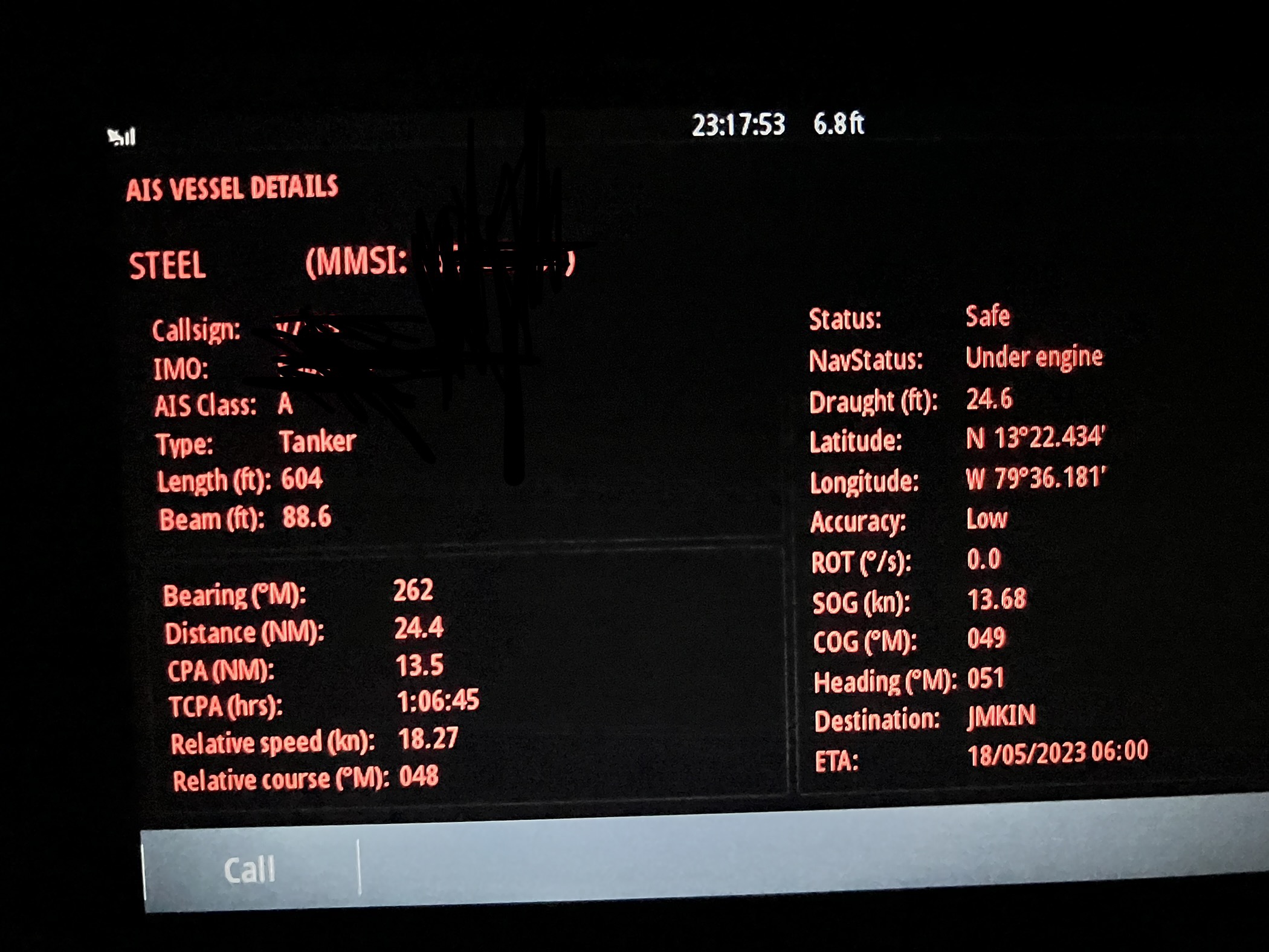
However, what I’m really worried about are possible pirates. Haiti is in a state of unrest and it’s common to find Cuban chugs coming ashore in desperation in Florida. Although we didn’t find any piracy reports in this area since the beginning of this year, the history still exists, and so does my anxiety. As we drift in the moonlight, I can see lights from Cuba, and being downwind from Haiti, I smell smoke blowing in our way. I wonder what’s burning?
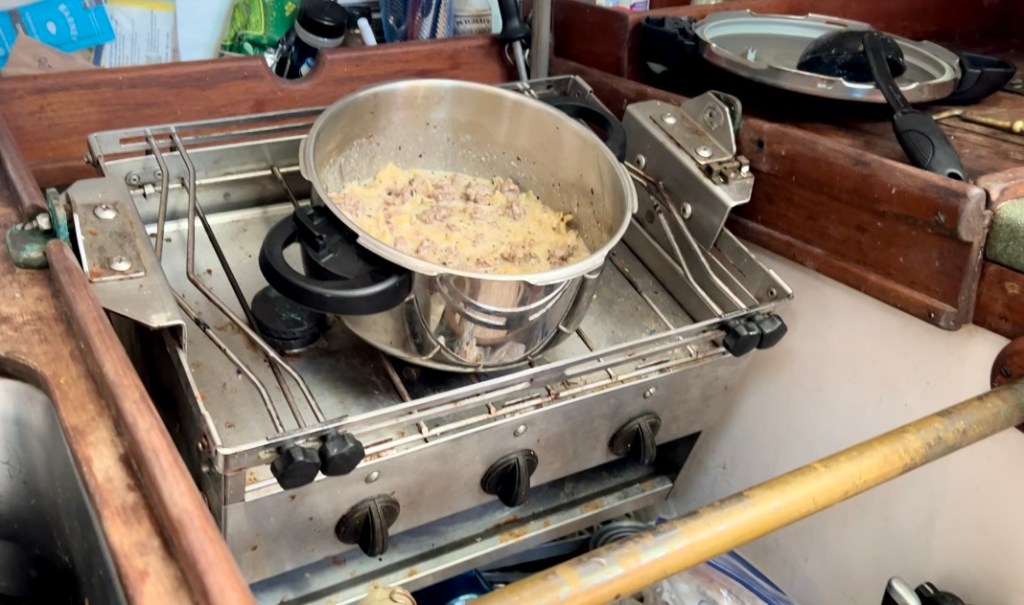
The next day, (after I caught up on sleep), I warm up Hamburger Helper for lunch. Cooking underway can be a huge pain. Our little propane stove top swings on a gimbal as we roll with the waves. Sometimes it rocks back and forth with a predictable rhythm I can handle. Other times, it’s more dramatic. Everything is sliding around on every surface it can. Cutting vegetables feels like the knife roulette game you play as dumb kids. And if you’re not holding onto your bowl or plate, it will inevitably fall onto the wood floor. Sometimes it’s the little things that keep us sane, to meal prep was essential for me for this trip. Brendan and I sit in the cockpit together to eat. Hamburger Helper was a quick meal my mother would whip us up as children, so I sit back and enjoy the fond memories paired with my comfort food.
Jamaica was in our sights, but the winds died out on us. The sweltering sun beams down and no matter what we do, we just cannot cool ourselves enough. Having to run our diesel engine to keep propelling forward and get past the dead calm zone, our frustrations begin to grow. The loud rattling engine pumping gross fumes and exhaust is awful. We’ve had concerns about how hot the engine has been running lately too, so nerves spike again. We stink from nonstop sweating, and the heat keeps me away from the hot stove. We lean on bread, peanut butter, and cheese. Trying to sleep in the bed or settee feels impossible, rolling in our own discomforts. Moral was taking a sharp decline, and this blazing day seemed to last forever.
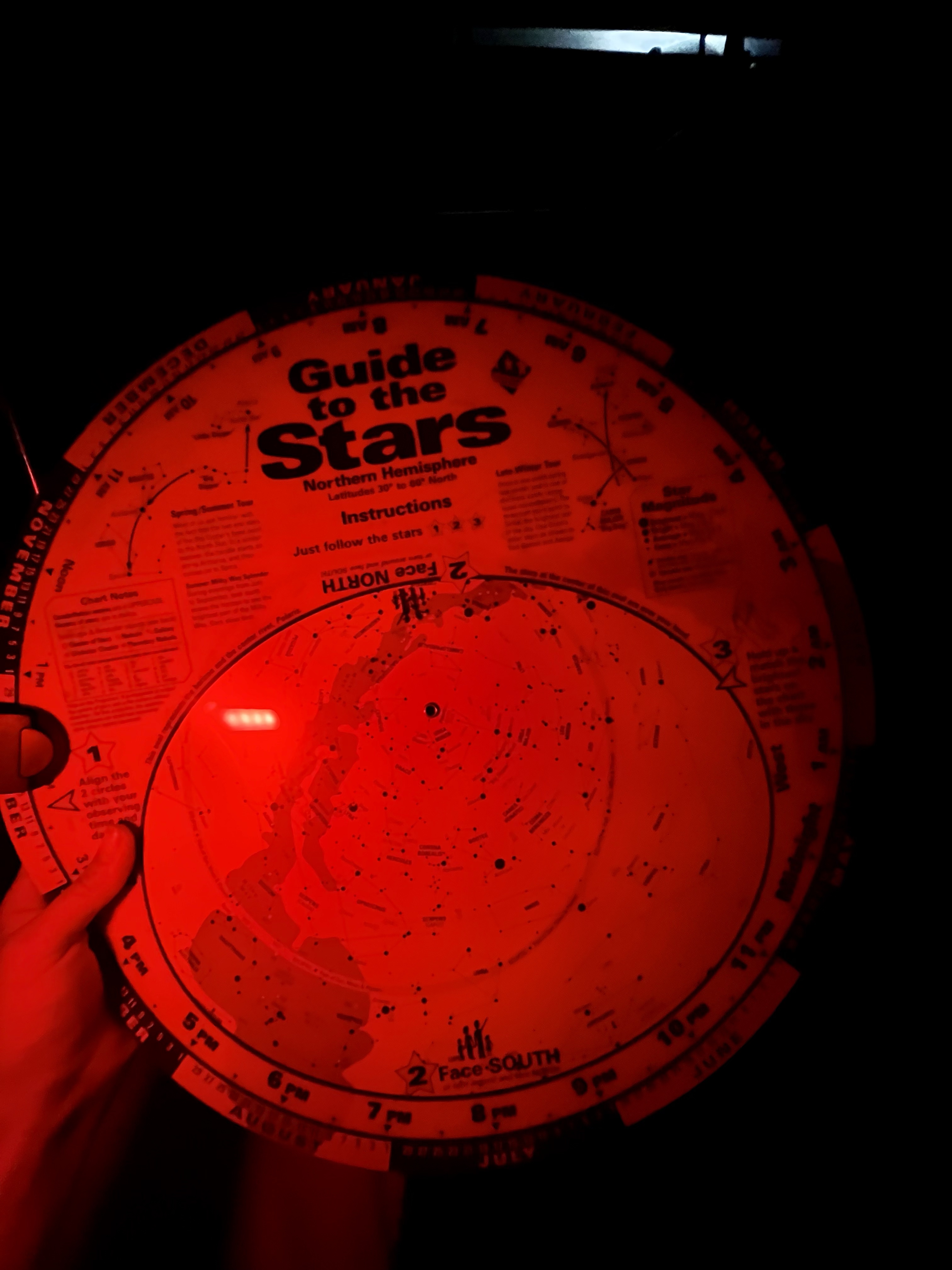
Finally, night fell, and the boat (along with our tempers) cooled down. A slight breeze picks up. However, from the weather reports we received from our friends messaging us on our handheld Garmin Inreach, it wouldn’t be until tomorrow until we could truly escape this dead calm. The sky was clear though, and the stars were out in full force. I take the opportunity to study the constellations and have fun creating ones of my own. I memorize Leo, the Sickle, Hercules, the Corona Borealis, and Bootes. But my favorite was my own, the sparkling flamenco dancer I gazed at, spinning in the sky above me.

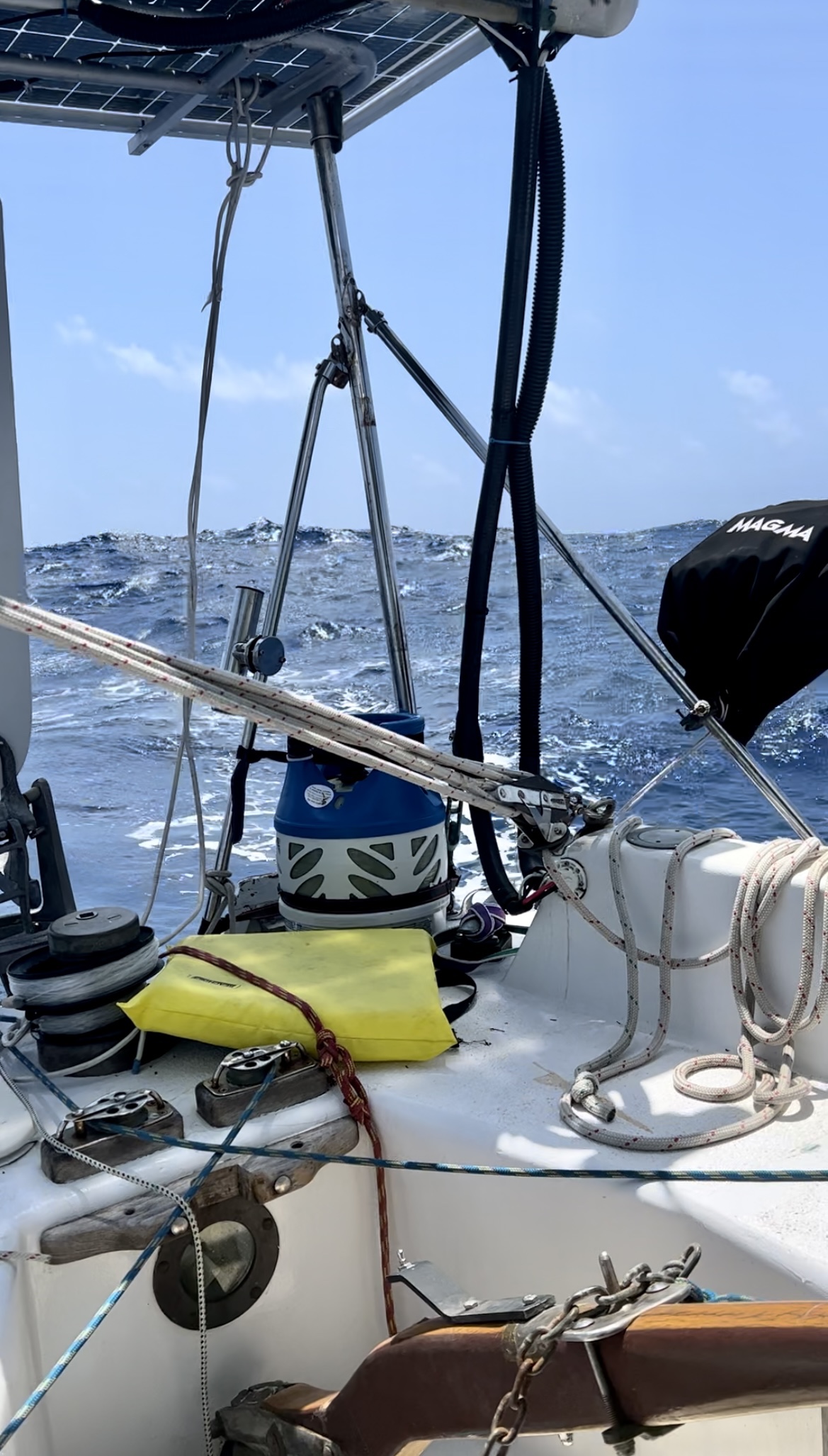
By morning, we were sailing full speed again. We get our groove back and press through the next couple days with routine, finding rhythm in the madness. Jamaica was now behind us, but now in the open Caribbean Sea, the waves took on a whole new face. The biggest waves I had ever experienced in my life slowly rolled toward us. One particular morning, I wake up for my shift, and before I can stand, Brendan says, “Ok, don’t freak out…”
Waking to the clapping sounds of waves slapping the hull and leaning much more than usual, I already knew what he meant. I throw on my PDF and climb into the cockpit. “Holy shit!” I gawk, staring at the bright blue water hurtling toward us, one after the other. The wave periods weren’t as short as our Gulf Stream crossing, but they weren’t too long either.
So, how big were they? Well, this is always a slippery slope question. Like on ole’ salt’s glory-days fishing stories, or the thrilled surfer after an exciting head-high surf session, it’s easy to innocently dramatize. Knowing this, both Brendan and I try to be conservative in our wave estimates. So, what’s the verdict? We guess 8-10 feet tall waves. And before you think, “Oh that’s not that tall,” ask yourself, am I like the old fisherman or the stoked surfer with starry eyes?
I clip my lifeline to my vest and get comfy. I finish reading Swell and start another interesting book titled, “The Lost Art of Reading Nature’s Signs,” by Tristan Gooley. Although every once in a while, a large swell will push us over further than I enjoy, overall, I become comfortable with the heavier rolling. I catch myself staring at the waves and predicting the degrees it’ll roll us. 20… 30… 40… 20… 15… 30… Hey, I’m getting kind of good at this.


I switch between reading and practicing Spanish with preloaded lessons on the Babbel app. I listen to music on my Bluetooth speaker and jot down random thoughts and ideas that come to mind in a journal. I’ve given up brushing my hair. It’s in the worst knot it’s ever been in, and I just can’t deal with it. To keep it from dreading itself and further, I keep it in a wrecked ponytail or a messy high bun. A cloth hairband keeps the flyaway hairs away from my face and I do my best to keep up a basic personal hygiene routine. Sometimes it gets tough though. With the boat tilting, it can be a struggle just getting from one side of the boat to the other and having our head (aka restroom) at the forward bow, going potty can be an annoying zero-gravity experience.
However, a simple wildlife sighting can truly outshine the tough times. I was about to get ready to switch shifts when my ears caught the inconspicuous “Pfffst…” of a blowhole breaching the surface near us. What was that?
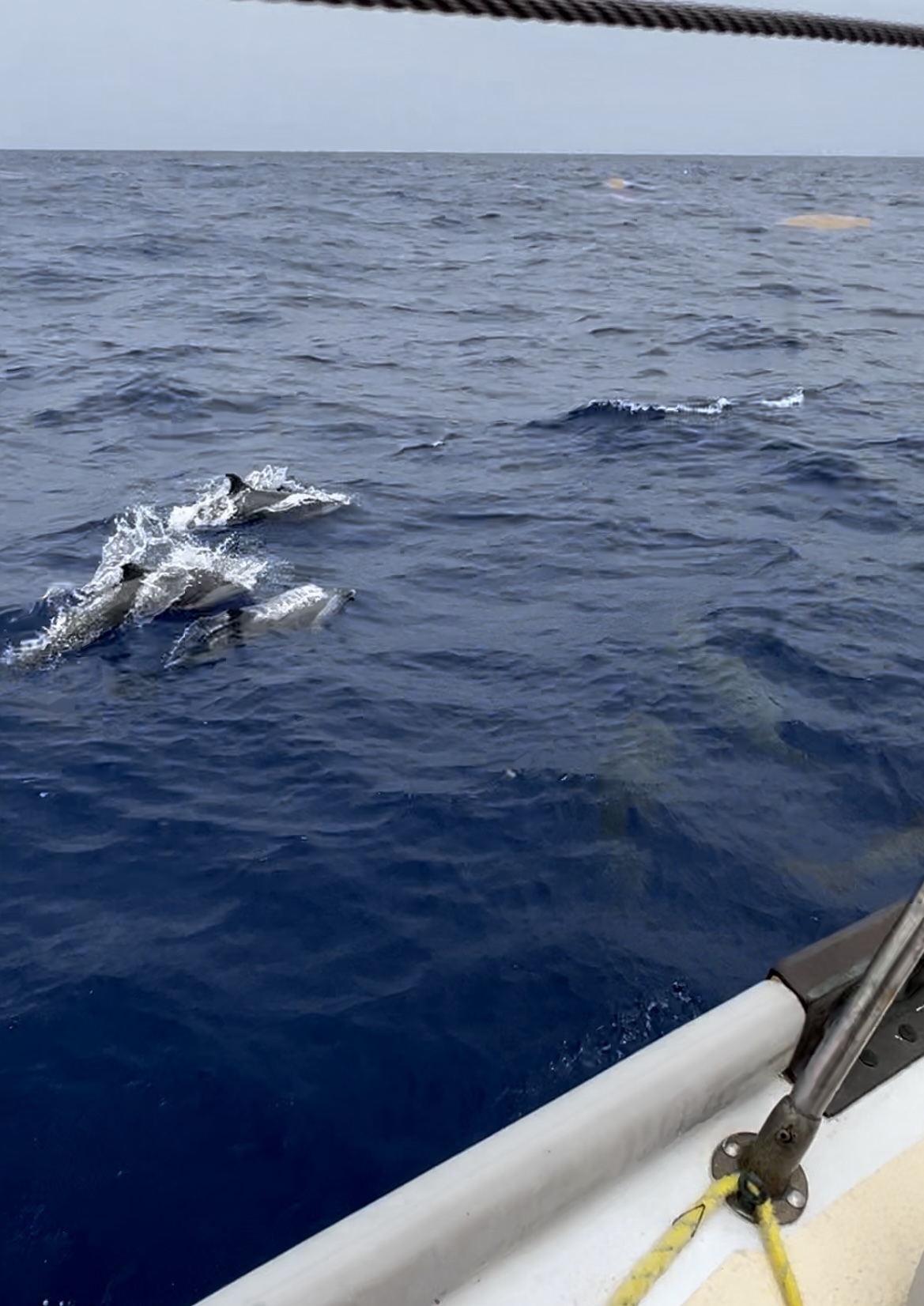
I stand up and scan along our wake. A pod of what looks to be spinner dolphins (Stenella longiristris) break through the surface and splash through the waves riding alongside Belafonte! One by one they pop up for air and race up to our bow cutting through the deep-blue water. There’s a baby! Two babies! Large adults pump their powerful tails to swim away from the boat and then zoom up to the front like a missile. They jump and play, surfing our wake and zipping through the water. I count at least 10 adults. “Brendan, dolphins!” I shout below. I watch them, mesmerized by their power, speed, and beauty. When Brendan comes up, I clip my PFD to the lifeline and slowly crawl my way towards the bow to have a closer look. I record their dance and take a few last photos before I put down my phone to enjoy this slice of nature for myself. I’m washed over by an emotion of what I can best describe as, peaceful relief coated in wondrous awe.
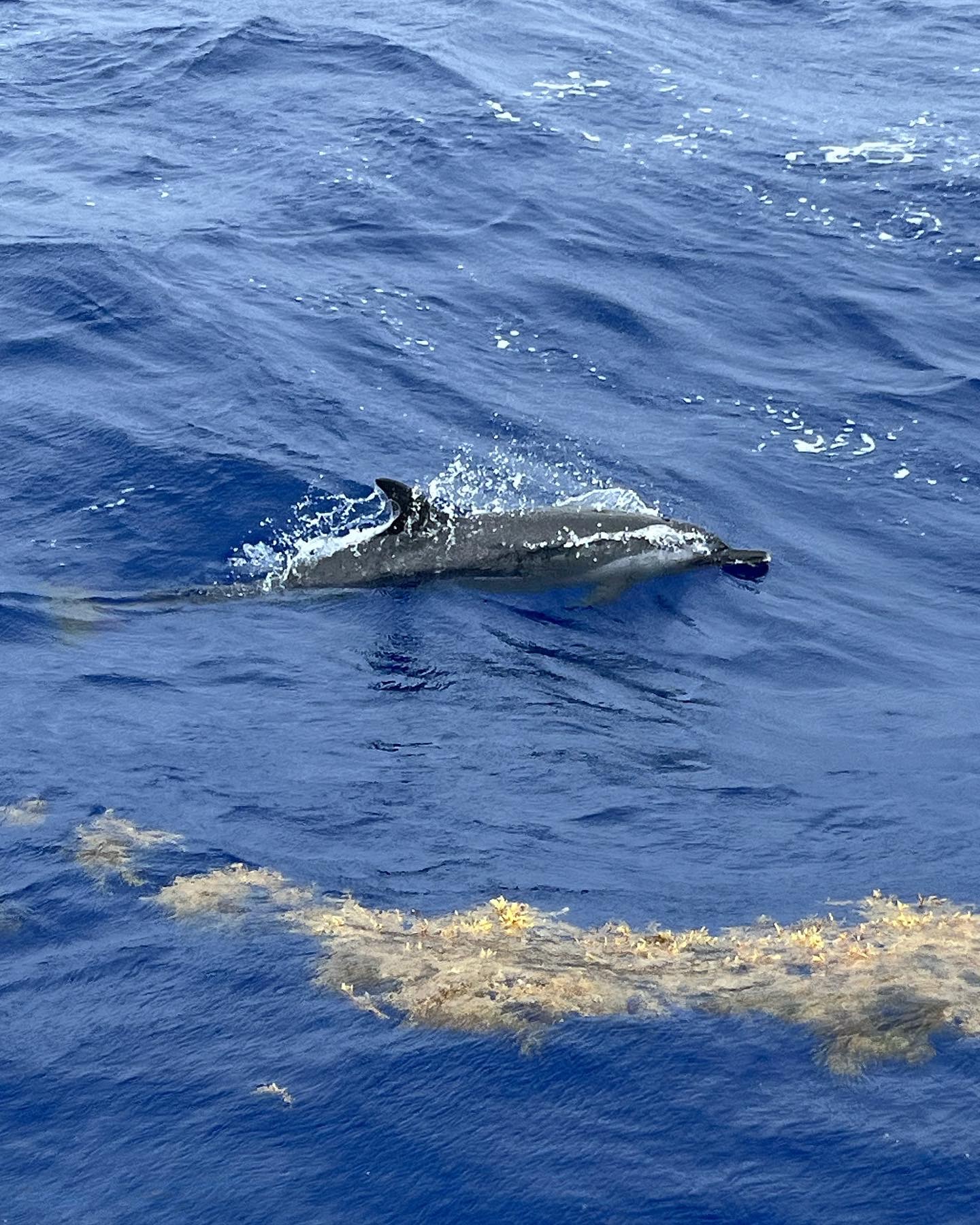


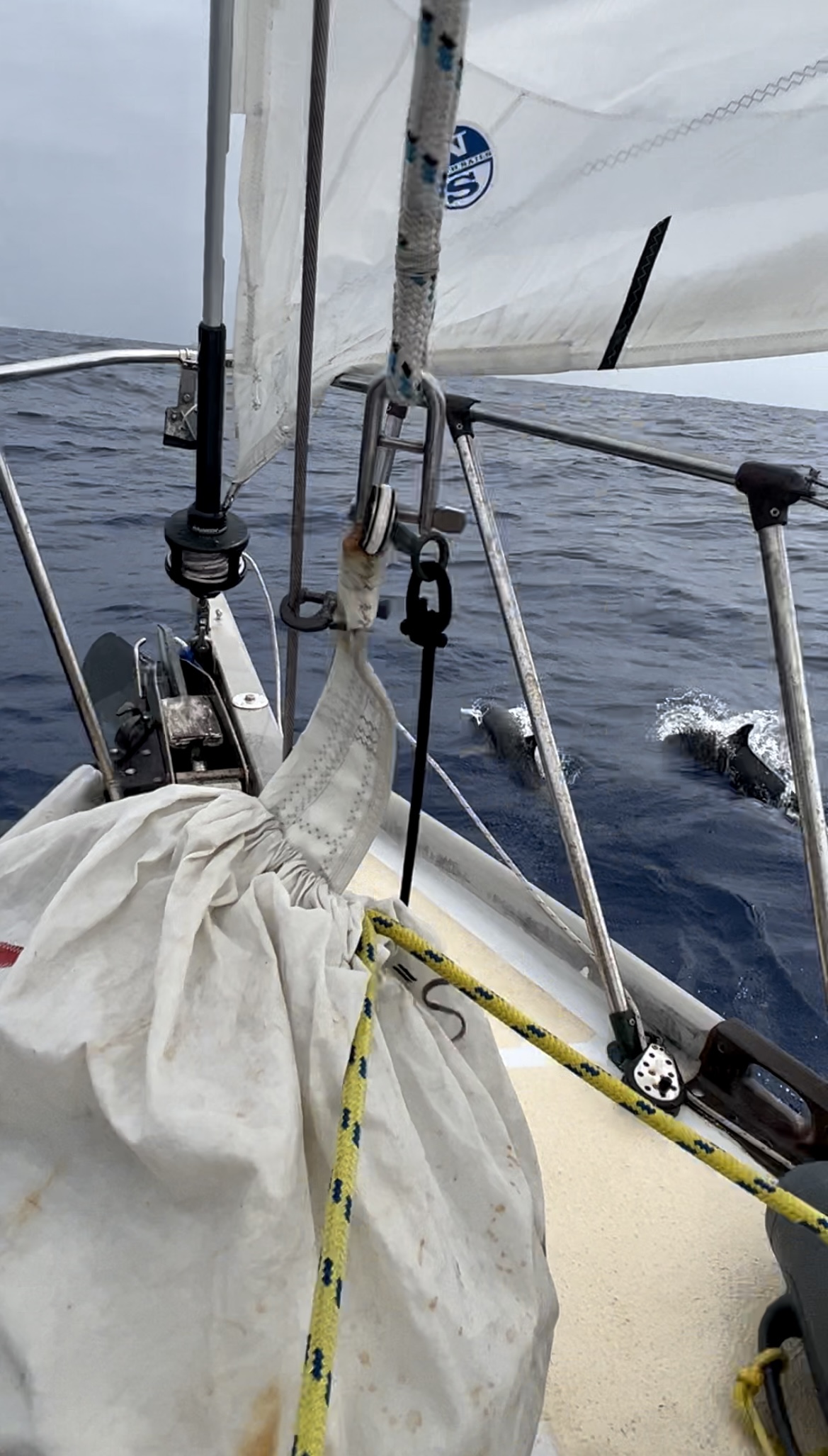
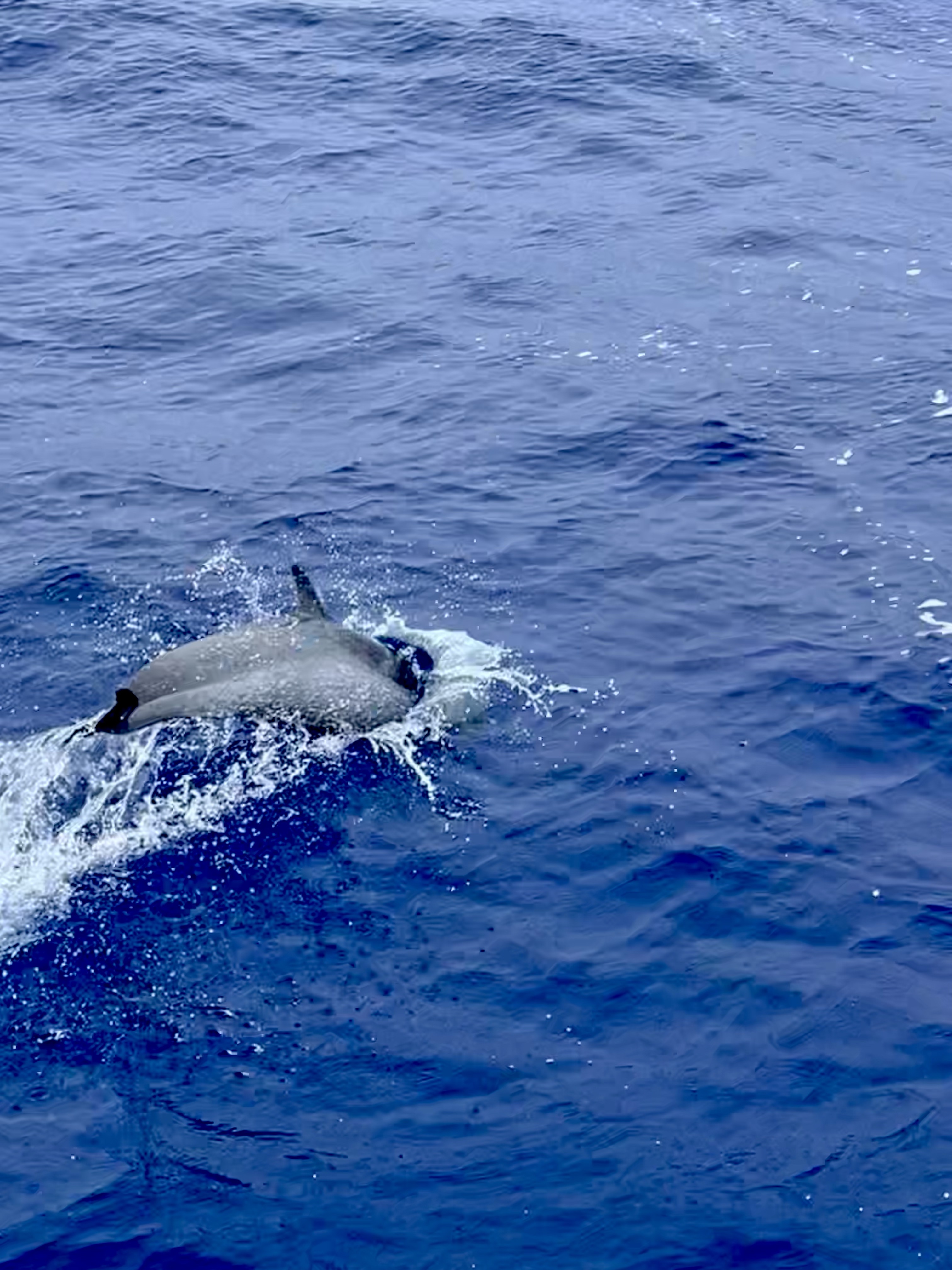
When I was in the 4th grade, we had a big “invention day.” Like a science fare, it was a long-term project when all the students made their own unique inventions, complete with a handmade prototype and accompanying a presentation about our creations. I remember one kid made a driver-less lawnmower; another made an automatically flushing toilet that talked to you. Certainly, cleaver solutions to their home chores and everyday fourth-grader problems of the early 2000s. Motivated by my fantastic teacher, Mrs. Smith, I was inspired to create an invention to help something I loved. Even as a child, I was infatuated with marine life, a love I’ve always had, for as long as I can remember. My invention was a prosthetic dolphin fin. I remember morphing grey play-dough around my stuffed animal dolphin’s flipper, and trying my best to describe how it would actually work. I was proud of my creation, and even enjoyed the assignment. It was a transformative experience that I will never forget and recall it nearly every time I see dolphins in the wild.
My mind flashes back from the memory as I sit on the Belafonte’s bow to notice a large adult had popped its face out of the water and seemed to be stared at me. We make eye contact as it continued swimming, seemingly suspended in position, starring back at me. It then dove back down, and I floated in my own emotions, enjoying the moment until finally they disappeared into the darkening sea.
It was already day five. Days and nights rotate through our six-hour shifts. We wade through moments of gratitude and motivation, as well as grief, and discomfort. Regular radio checks with our buddy boat Motherload Sailing help keep all our minds in check. They have been experiencing their own silver linings and scares. They were fortunate enough to catch a beautiful yellowfin tuna to feed their family. Unfortunately, that luck dwindled one day when they nearly lost their rudder. This, it one of the absolute worst things that could possibly happen. It’s probably the top reason sailboats are abandoned at sea. With nearly 10,000 feet of water below us, it would have completely totaled their vessel, and this story would have been a rescue mission to save their crew. However, with a bit of luck still in their tanks, they managed to notice the issue before too long and fix it before all was lost. It’s a wild story all on its own, so I encourage you to check out their YouTube video on the event here.
Sunrises and sunsets rotate, and soon day seven was upon us. I finish my second book (which was also a great read by the way). We joke around and have fun together when we can, but anticipation is growing. We are ready to finally get to Panamá and relax. Scanning the charts, we seemed to be so close! Could we arrive by tomorrow? Unfortunately, the winds disagreed and died on us again. Motherload Sailing was far ahead of us at this point, so we turn on the hot smelly engine once more and push onward.
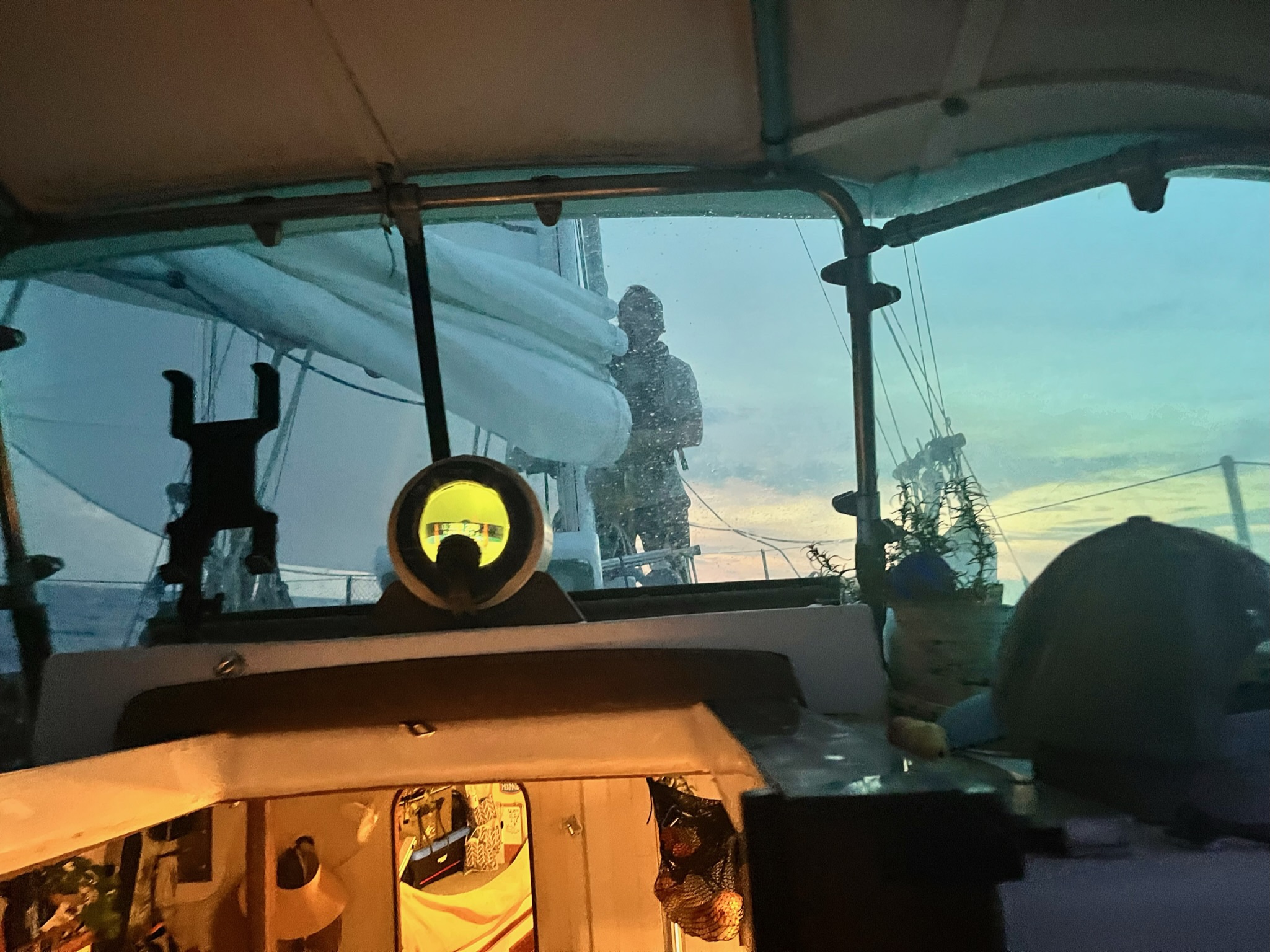
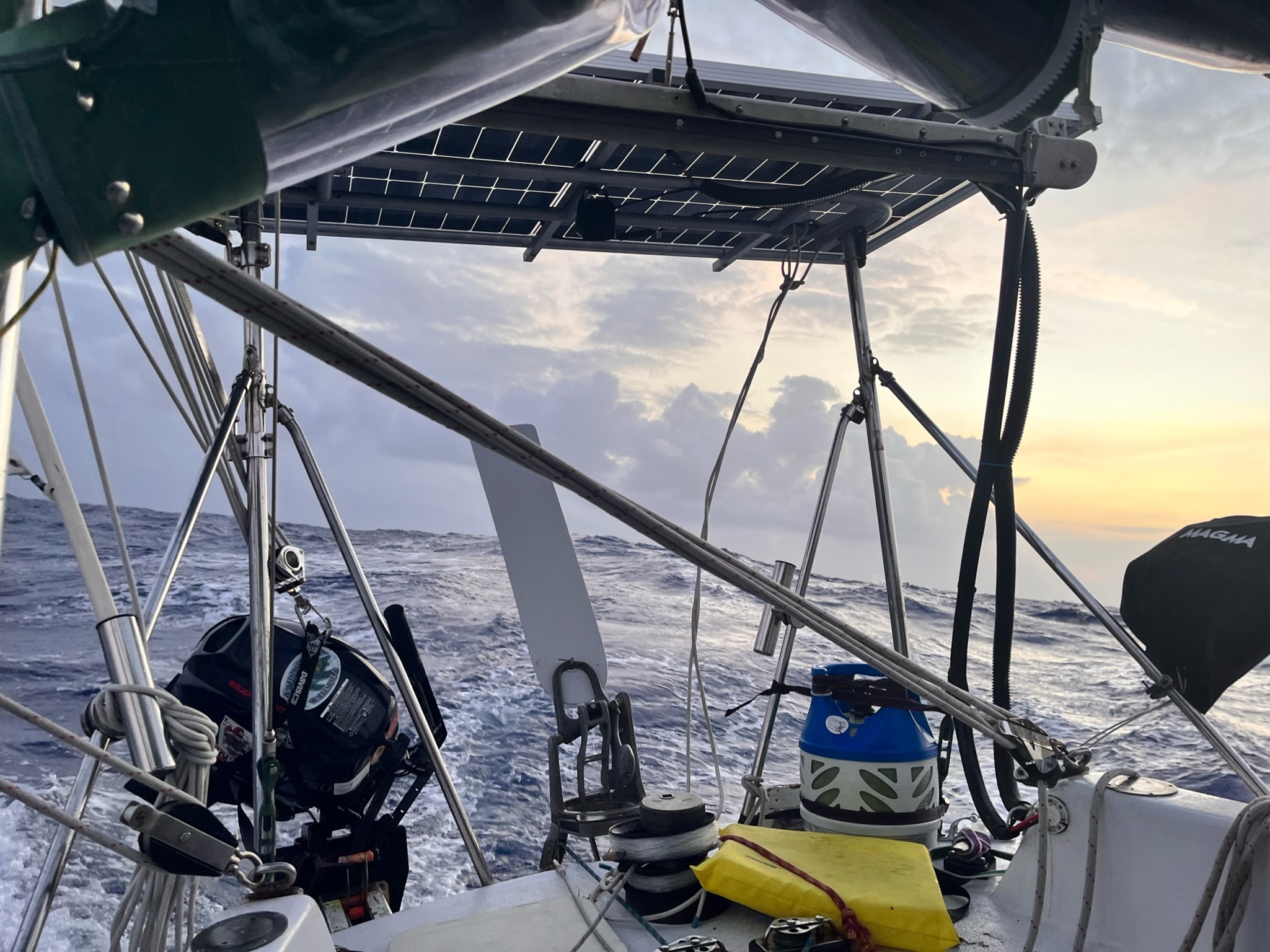
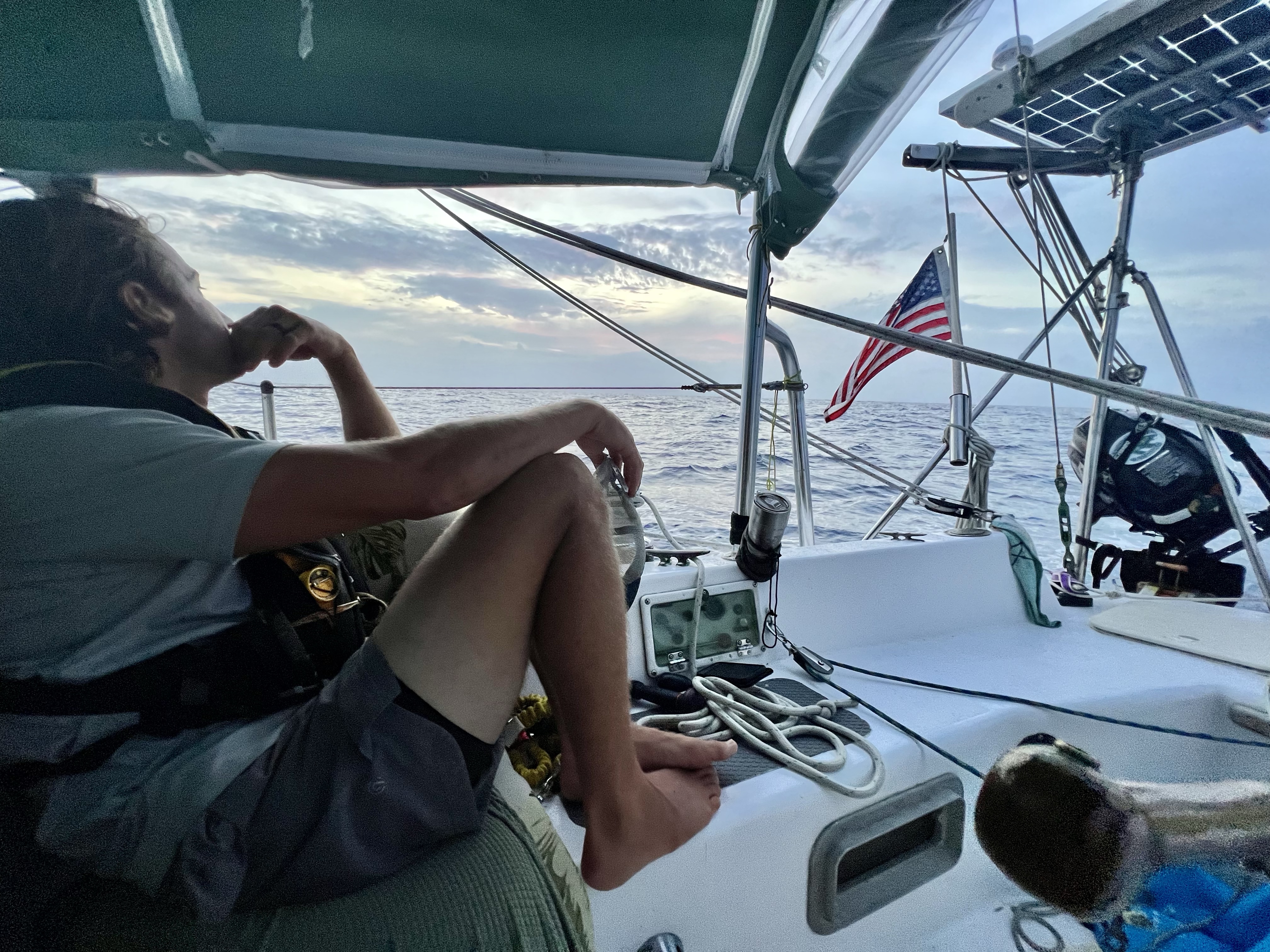

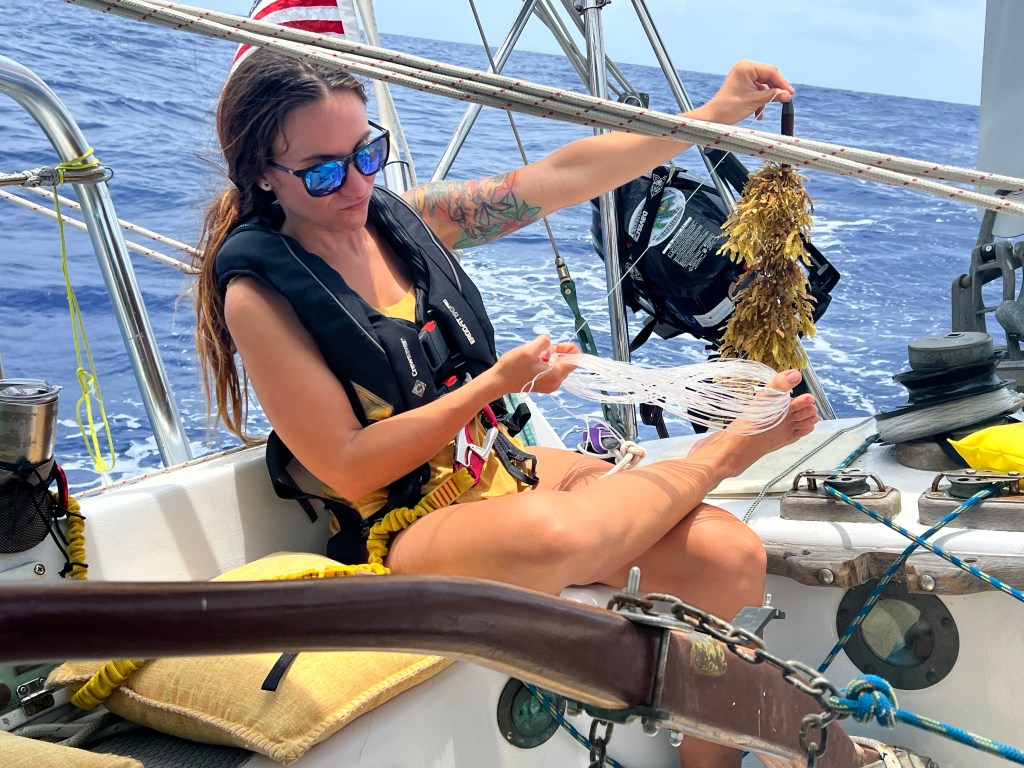
We have not caught a single fish the entire trip, only clumps of sargassum seaweed. I scan the deck and find a dried-up flying fish who fell victim to his own fear. “Oh… Sorry bud,” I moan – reflecting on my own fears – hoping my risks don’t leave me dry. I pick him up and put him on the handline hook trailing behind the boat to see what happens. Nothing. I toss it back home into the sea and put away the fishing lines. What’s the use anyways. I go down below to nap, before what (I hope) will be my last night shift before arrival.
If you have been following this story from Part 1, this is where our story began…
A blanket of stars swept over the night sky. I type on my laptop trying to piece together our journey up to this point, but it’s tough. My butt hurts from sitting in the same position for too long. Waves of exhaustion wash over me randomly, but I’m also buzzing and over pouring with questions, thoughts, and ideas. What will the next 24 hours bring?
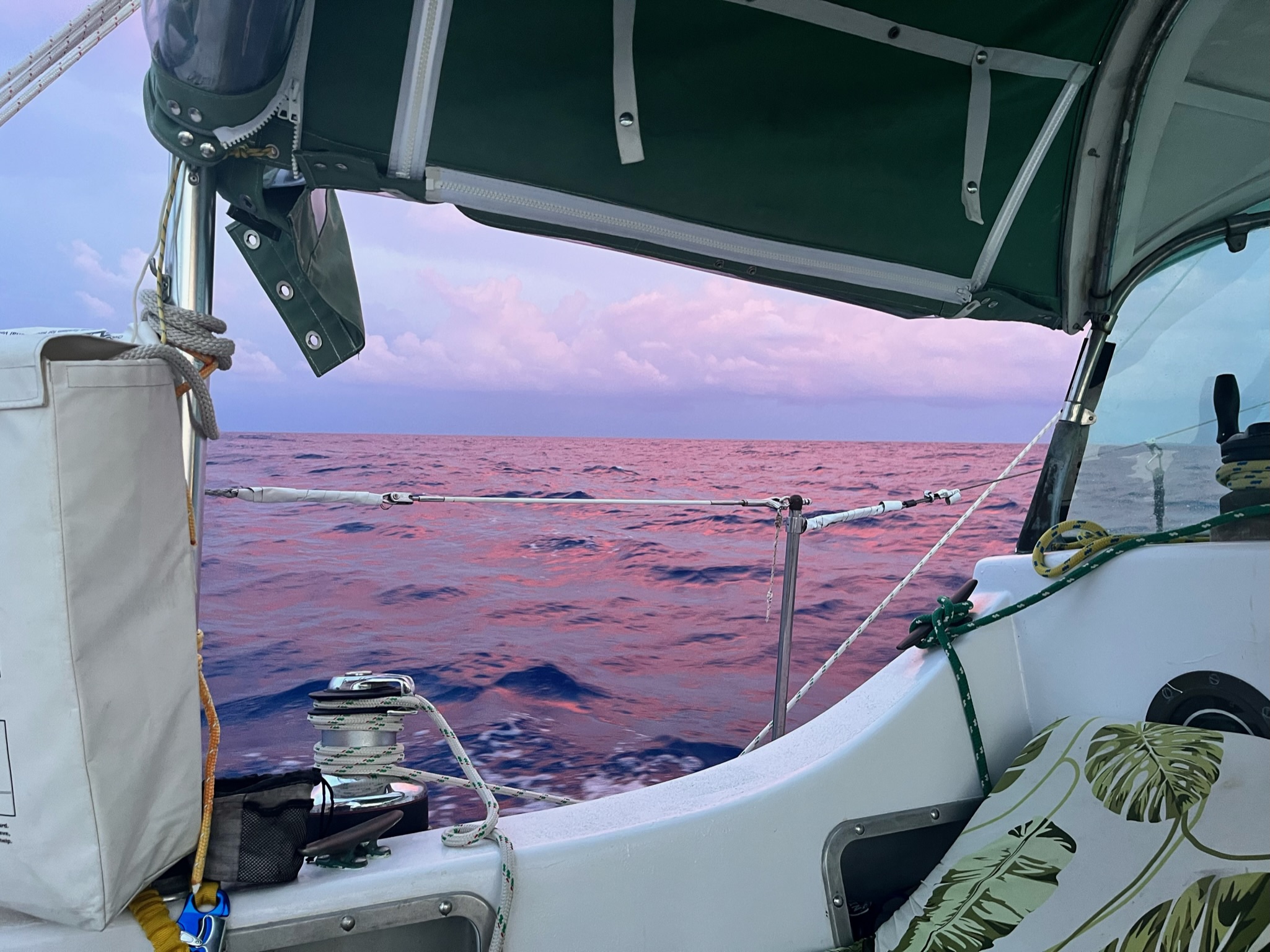
Buddy Guy’s guitar cries out from my speaker as we rock and roll together. I lean back, poking my head out from under our sage-green bimini. I look down into the black shadowed sea and smile hello to my bioluminescent accompanists, who have made their showy performance for me every night. I turn my face toward the night sky and greet the new friends above me, the constellations, and my flamenco dancer. I gaze into the Milky Way’s twinkling band, stretched across the clear, starry night like an interstellar highway. A small meteor zips by, long thin tail ablaze, and for a moment, the clouds in my mind dissipate. I feel calm and can see clearly.
When Brendan relives me at 3 a.m., my mind is strong, but my body can’t wait to lay in our comfy bed. Typically, we’ve been sleeping on the settee in the salon (aka the living room couch), because being closer to the companion way (aka front door) means it’s easier to respond if the other calls for help. However, it’s a calm night. I get the green light to get comfy, and it feels like a treat. Four-inch foam pad, here I come! I give Brendan a kiss goodnight and drop into the cabin.
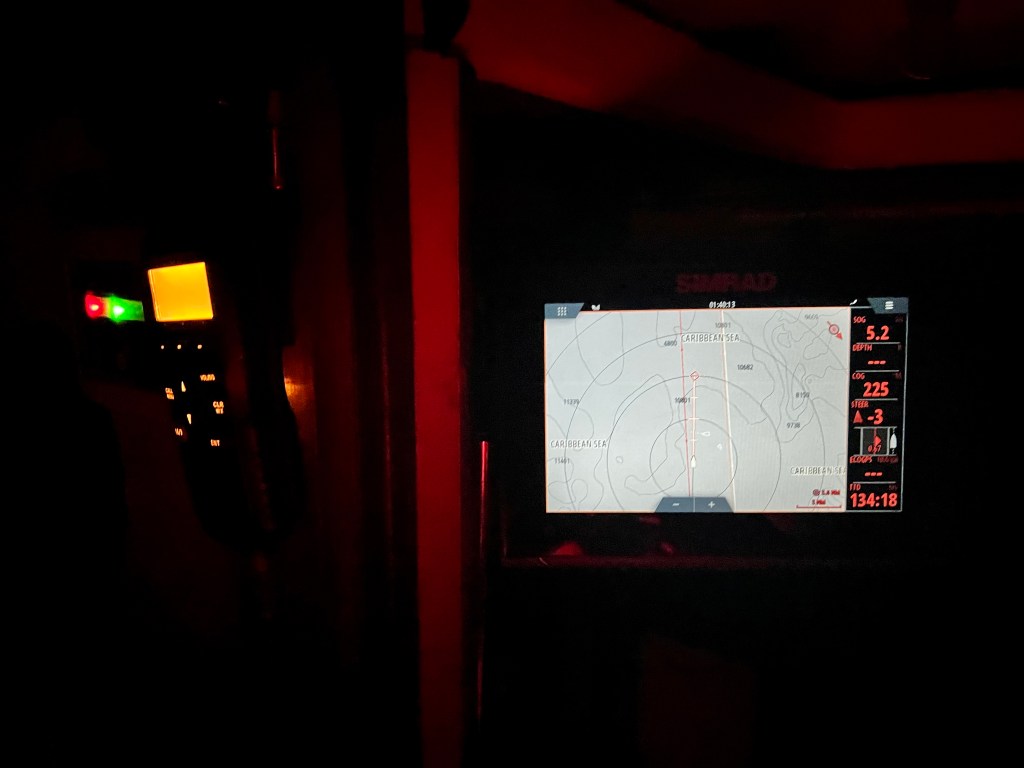
Night vision friendly red lights dimly glow my path. But even without their warm light, our proprioception on Belafonte has grown, so even in the dark we step with confident coordination through the boat. Sometimes it’s like a dance. You feel the patterns of the swell lifting and dropping you, and a rhythm from the waves leaning your world becomes apparent. Without thinking about it, you time your movements to this rhythm. Grab here during the drops, stop there for the lifts, have both feet planted for this, make your jumps during that.
I brush my teeth, splash a handful of water on my face, and hop into bed. I inhale deeply, stretching out my lungs and elongate my arms and legs as far as they’ll go. I spew a playful sigh of relief. I feel like a kid on Christmas eve, anticipating tomorrow’s arrival, as I wiggle into a cozy position and slowly drift to sleep.
“Bizz, bizz, bizz, bizz….” My eyes reel open to my phone alarm. I hear the engine’s rumble as I go through the motions of getting ready for watch. It’s cloudy and the wind is completely absent. Ugh. I can see Brendan is tired, but restless with frustration. “We definitely aren’t getting there in time to check in with customs today… it’s Friday, if we don’t catch wind we’re going to be stuck on this boat in the anchorage until Monday,” Brendan says. I know he’s right, but I reject the thought. I’m not in the best of moods myself. It’s officially been seven days. Seven days of sitting and rolling around like a buoy without touching the ground. Seven days of superficial bucket showers. Seven days without communication with the outside world other than the occasional short typed out satellite messages of encouragement from family and friends on our Garmin Inreach. Seven days of worrying and wondering about more things than I care to list. Seven days of waiting to get “there.” It’s been an incredible journey, but we are both ready to “tag” base. We sit together for a while until Brendan finally goes to nap.
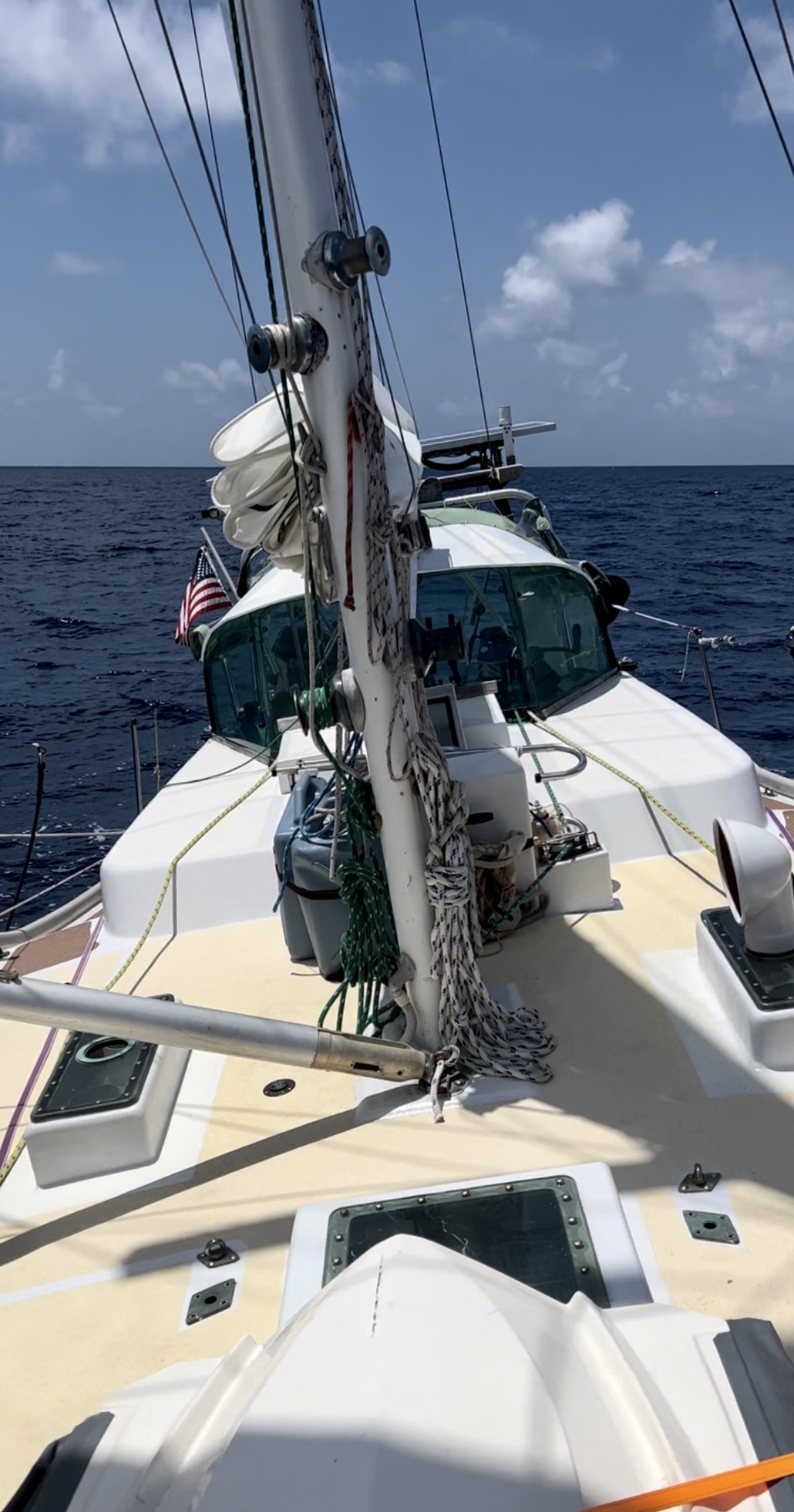
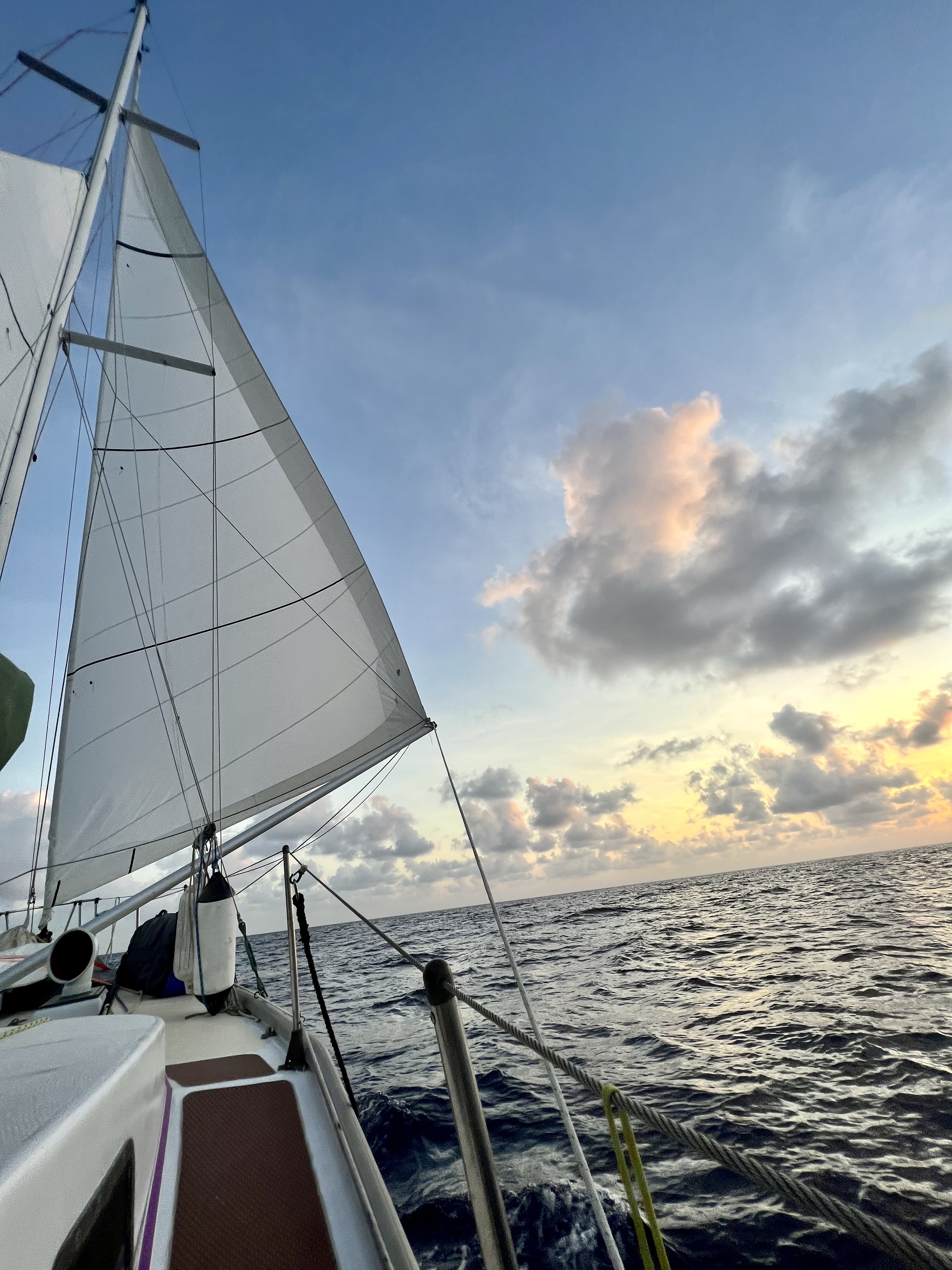
We lost radio communication with Motherload Sailing today as they are now a good distance ahead of us and finally out of range. I hope they’re doing well. I flip through Latin music playlists to get in the Spanish-speaking frame of mind. One of my favorites is a genre called Eléctrica Selvática. It sounds like a hypnotic jungle folklore style of EDM music, with mystical vibes and likewise album covers accompanying each song that look like a shaman showed up at a rave. Anyways, it holds my attention and is upbeat enough to power me through the gloomy weather. It starts to rain again. I roll down our rain panels and stare at the chart plotter. We are sooo close! The day seems to drag on forever.
By the time Brendan wakes back up, our arrival has inched closer into our reality. It’s on the chart, but still not in sight. A few more slow, cloudy, rainy hours pass by.
Until finally…
“Land!!” Brendan shouts, standing on top the cockpit combing, peering over the bimini. “What for real?” I hop up on the other side. “Hey!! Land!! Hahaha, LAND-HOEEEE!!!!” I holler. We look at each other and giggle, giving each other that “told ya so” look, grinning from ear to ear. A wave of excitement shoots through my body and I burst out howling like a wild dog. Brendan laughs as he drops back down to zoom in on the charts.
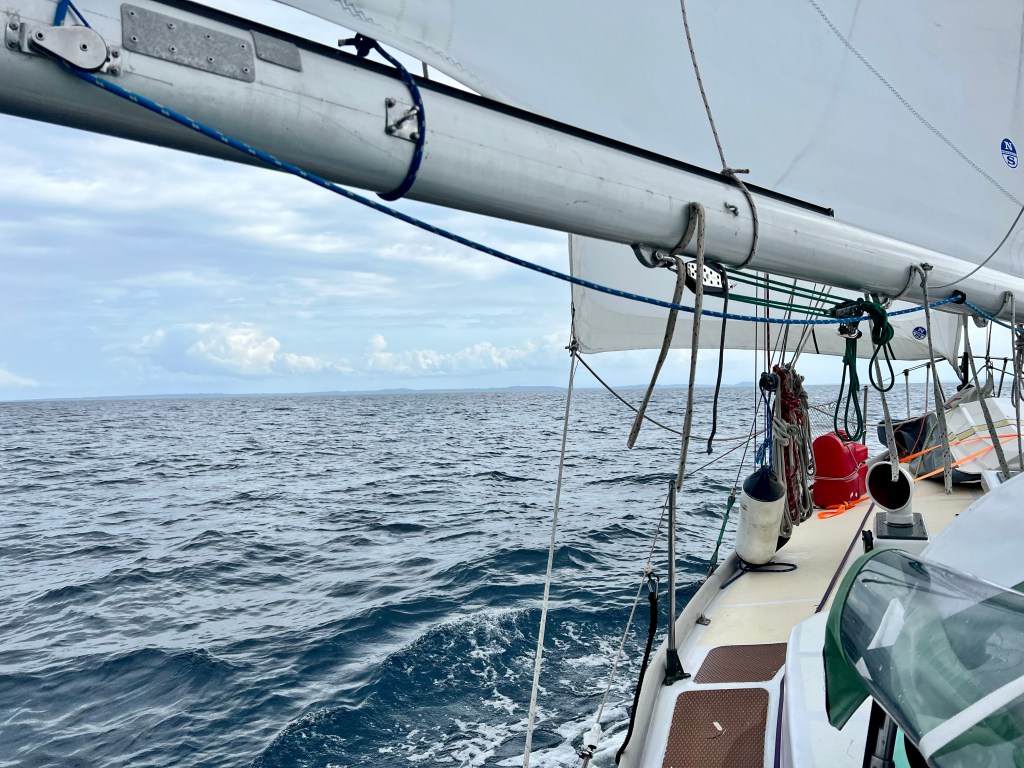
The shadow of massive mountains outline the horizon, accented by shades of blues and greys. In time, shades of black then green become apparent. The ocean below is still a dark, deep navy blue. Tiny, expanding ripples surround us as sprinkles of rain hit the smooth water. The closer we get, large bamboo logs start to float by. You don’t want to run into that. Once we get into radio range, Brendan calls the Bocas Marina on Channel 16 to request information for the check-in process. We get a quick rundown and proceed forward. The rain finally ceased. Everything seemed to be going fine, maybe not perfect, but certainly fine. We are finally two miles outside of the inlet!
Just two miles, from the inlet.
TWO MILES from the INLET…
And our motor, dies.
WHAT??
Belafonte’s motor, allowing us to propel forward in what is barely two knots of wind, completely dies. Shuts off. Gives up. Taps out. Quits…. Two miles from the inlet!
You’ve got to be joking.
We haven’t entered this inlet before. Are we going to need to dodge any sketchy spots? With no propulsion, we essentially have no power for steering. No wind, no motor. To put it plainly, this is a problem.
We immediately unfurl the jib. Luckily, the wind (although extremely light) was still behind us. Brendan turns to me and says, “Ok, keep on towards the inlet. I’ll go check on the engine.” Damn, I hope these charts are up to date, I think as Brendan goes below. We’re moving at 2 knots. Yikes. A bit later he pops back up, “This might be a fuel issue. There’s still three inches of fuel (inside our 10-inch, 30-gallon fuel tank), so we should have enough… But…” He then spits out his mental troubleshooting, “But where’s the pickup line? How low does the fuel pick up line sit?…”
We contact Bocas Marina once more to let them know our situation as we attempt to sail towards the inlet, with no wind. There’s no boat towing service here if you get into a bind, unlike back home in the United States. We are on our own.
But are we?
We grab the Garmin Inreach and type out a message to our friends on Motherload Sailing, as well as our friend Paul Trammell, a fellow St. Augustinian, to see if anybody was around to help, and maybe bring a tank of diesel?
We are approaching the inlet entrance. I continue steering through the deepest numbers on the chart plotter, while keeping an eye out for tricks and debris. I scan the perimeter, and I see a red dinghy racing toward the inlet. Is that Paul? I grab the binoculars. At the same time, we receive a message from MJ on Motherload Sailing saying, the family’s stuck in the customs office right now, but they would come as soon as they can.
Sure enough, the approaching dinghy was Paul! Rolling up like a chariot to the rescue, I holler to Brendan down in the engine room, “Hey it is Paul!” He arrives, his long curly sun-bleached hair flowing in the wind. “Welcome to Panama!” he chuckles. “Oh man thank you so much!” we say, “Not exactly sure what’s going on with the engine here…” Paul ties his dinghy to the back of Belafonte and passes us up a tank of fuel. We add it in with fingers crossed. We try to start the motor again. Still, it fails to start. We are nearly inside the inlet at this point, no turning back now. We must sail into the anchorage.
To be clear, we’ve sailed to anchor plenty of times. It’s not a big deal, but again, this territory (unknown to us) has reefs, rocks, and other possible obstructions that could run us aground if we’re not careful. Also, you never want to rely solely on charts, you must use your own eyes and observe your surroundings. While this may seem obvious to many, you might be surprised at how often this unfortunately happens. While an incredible tool, charts can be inaccurate, and if you’re too busy stuck to your chart plotter, you might just be sorry.
But now we have a secret weapon, Paul! He arrived himself via the windward passage about a week ago, and has sailed through this inlet multiple times, with knowledge of the hazardous areas.
I scan the horizon, looking behind us to the north. A rainbow cascades down from the clouds. “Check it out,” I say, pointing toward the colorful and towering arch. Its bold, bright colors are as sweet to the eyes as honey is to the taste. While steering though the inlet between the two islands, I ponder the chances. Of all the storms we’ve encountered along our passages, we’ve been finding rainbows upon our arrival. Once again we are greeted by one of nature’s most interesting and friendly displays of beauty. Feelings of safety and appreciation wash over me.
My mind snaps back to the mission ahead. Paul informs us, “up here on your port there’s going to be a very shallow reef area, stay far off and you should be fine.” He points out the edge of the reef while I steer a little more to starboard. “You can see the coloration differentiation once you’re a little closer,” he says. Brendan walks to the bow to get the anchor ready. We round the corner and see the anchorage.
Almost there!
Once close, we quickly drop the sails and release the anchor. The chain clinks as it spills over the metal plate into a suitable patch below us. “Whoohoo! We made it!” we laugh, and inhale a deep breath of fresh air. We sit just south of Bastimentos, one of the many islands here in the Bocas del Toro archipelago. Small colorful buildings line the tropical island’s shoreline and hillside. Tall tropical trees, birds, and the smell of a smokey grill snag my attention. Several plumes of smoke rise into the sky and Caribbean dancehall music echoes from the town. We give Paul many thanks before he heads back to his boat before the sun set.
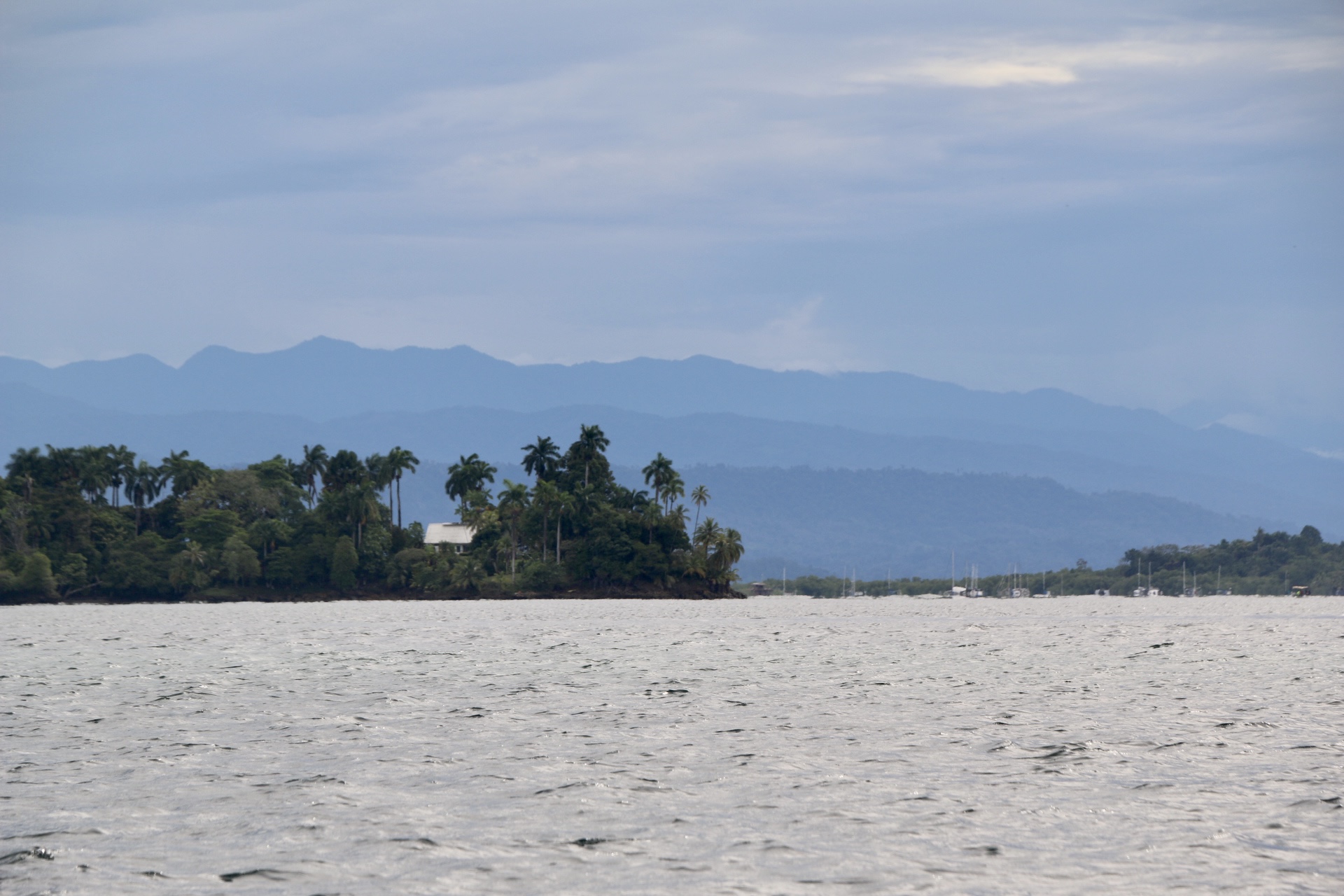


It’s way too late to check into the country, and we’re not permitted to leave our boat before then, so we go ahead and get comfortable and plan to call Customs and Immigration in the morning. Hopefully they’re able to come out and check us in on a Saturday. But for now, we’re just happy to have made it. Motherload Sailing swings by after we settle in, and we celebrate the victory of our seven and a half day long passage across the Caribbean Sea. The sky saturates in reds, pinks, oranges, and purples as the sun sets, and I smile at the thought of us chasing rainbows and finding the place within ourselves to push our own boundaries of what’s possible. We thought we were “finding rainbows” but we were really finding the beauty in overcoming the challenges. We found what’s possible, and where our dreams bordered our reality.
We did it. We made it to Panamá.
~~ PS ~~
Thank you so much for following along on our journey. We are so grateful for you and your support! Big shout out to the crew of Motherload Sailing on S/V Amy Renae and Paul Trammell on S/V Windflower! We appreciate you all so much!
We encourage you to check out with their adventurous as well. Paul Trammell is an author and the host of the Offshore Sailing and Cruising podcast. To check out his books, podcast and other projects, visit his website at www.PaulTrammell.com.
And if you haven’t checked out Motherload Sailing’s YouTube channel yet, head over now at www.YouTube.com/@MotherloadSailing, and give them a like and subscribe! They post awesome videos on the regular and every bit of support helps tremendously.
Thanks again for reading and we look forward to sharing the next chapter of our voyage with you, from Panamá! Cheers y’all!
 Sailing la Cosmica
I felt like I was on the boat rocking along with you, another great read!
LikeLiked by 1 person
Thank you so much! 🙂
LikeLike
Glad you made the crossing. Don’t know why but it brought images to my head of a spider monkey jumping from one tree to another. Even with no thumbs it has the ability to launch itself through thin air from one safe place to another safe perch defying gravity allowing itself a new tree to explore. Here’s to flying through thin air and finding a safe perch.
LikeLiked by 2 people
I can certainly relate to a spider monkey haha! Thank you for following along with our adventures, it means a lot to us!
LikeLike
Love how you record both in pictures and words y’all’s journey. It is so awesome that you take time to share this amazing adventure!
LikeLiked by 1 person
Thank you for the kind words, and thank you so much for reading along! We’re stoked to share our experiences with loved ones and share the adventure alongside you!
LikeLike
Thank you for taking me with you! Your words give me a visual as if I am with you in person! Safe travels dear hearts!
LikeLike
Thank you so much for reading and the kind words! Cheers and many thanks! 🙂
LikeLike